Tomba Brion
I went to Tomba Brion too long ago.
Four of us rented a car in Venice and drove off the lonely island, crossing the single bridge that tethers it to the rest of Italy. Perhaps it was the exact route Scarpa took when visiting the site.
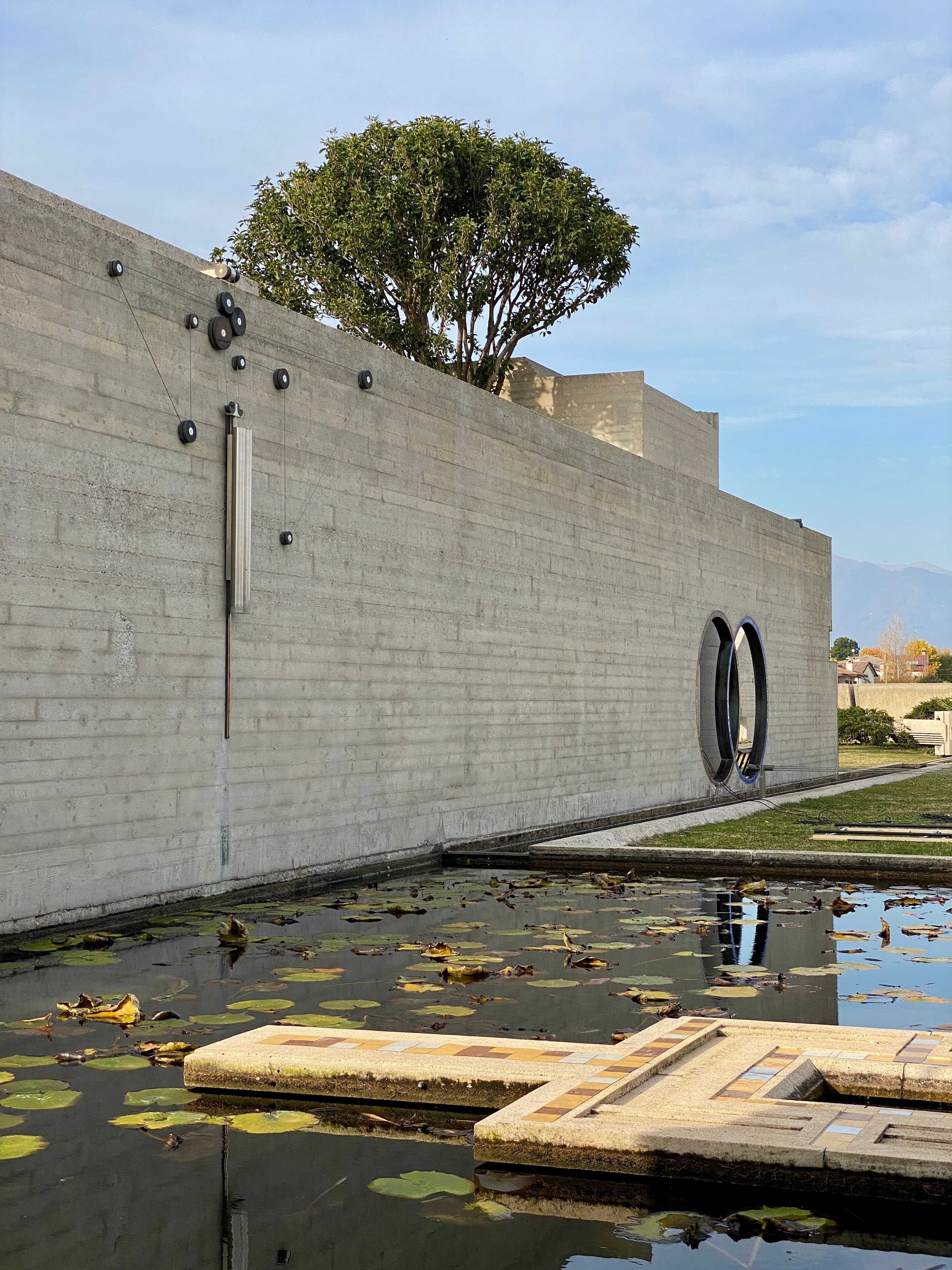
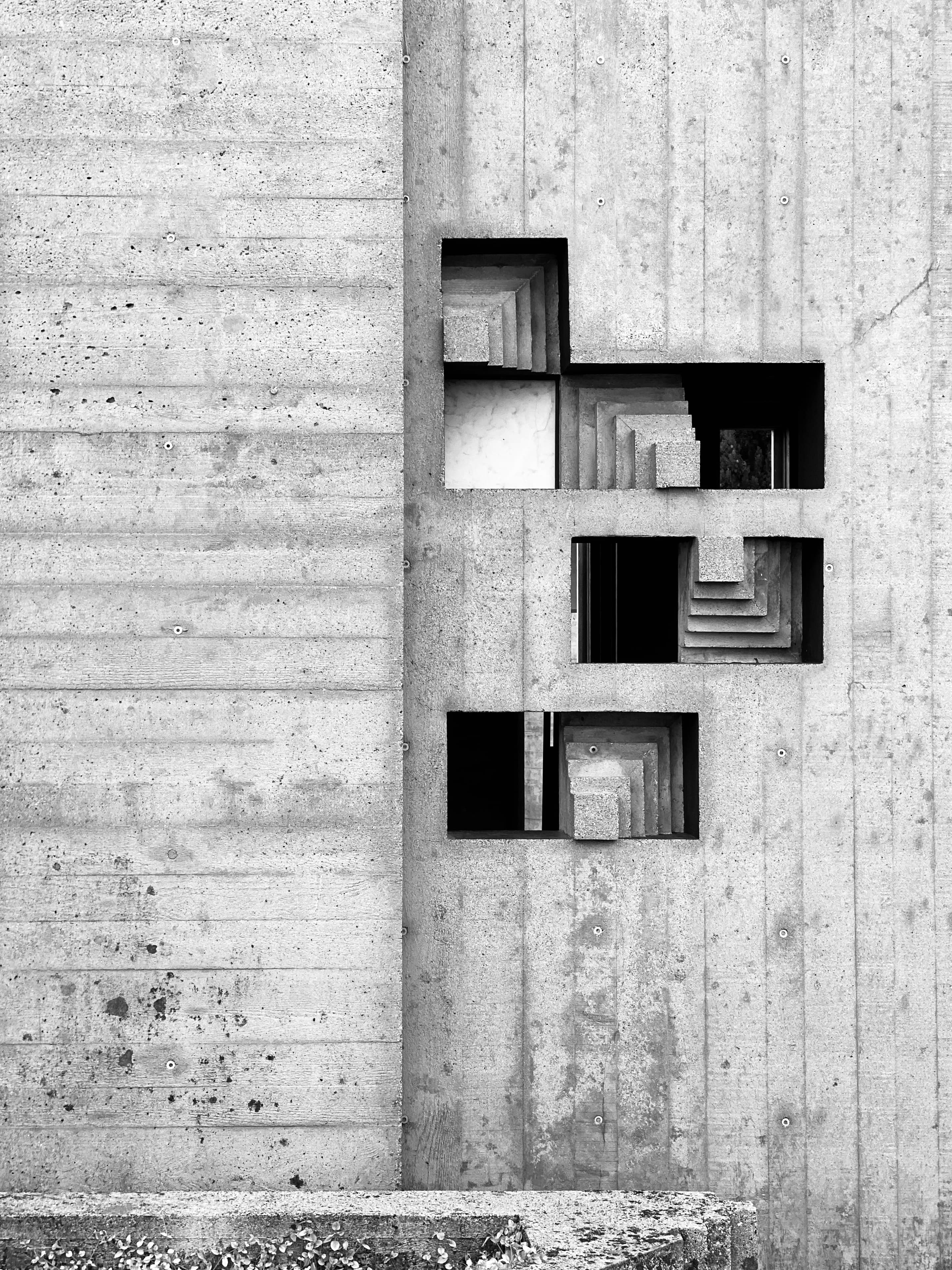
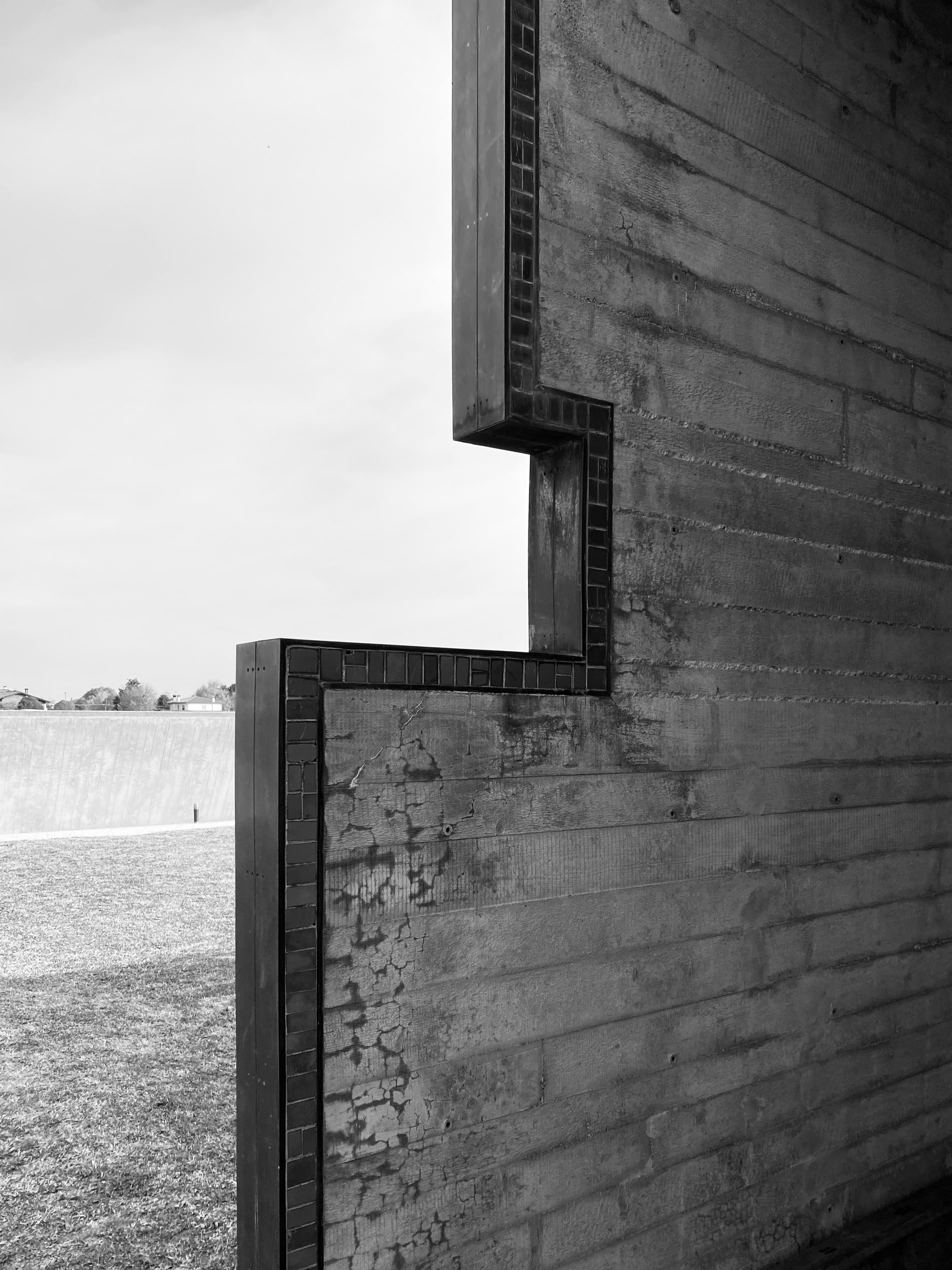
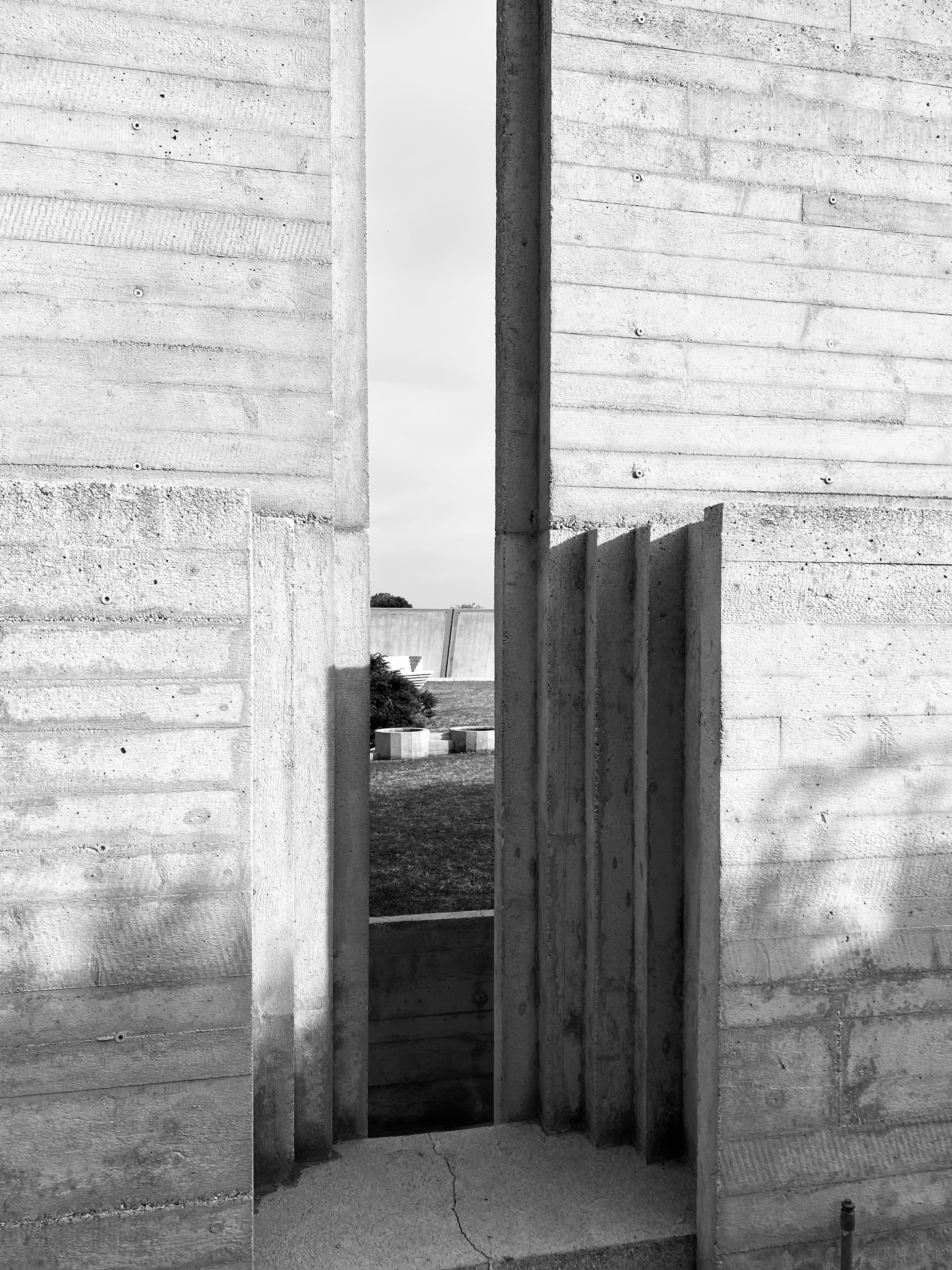
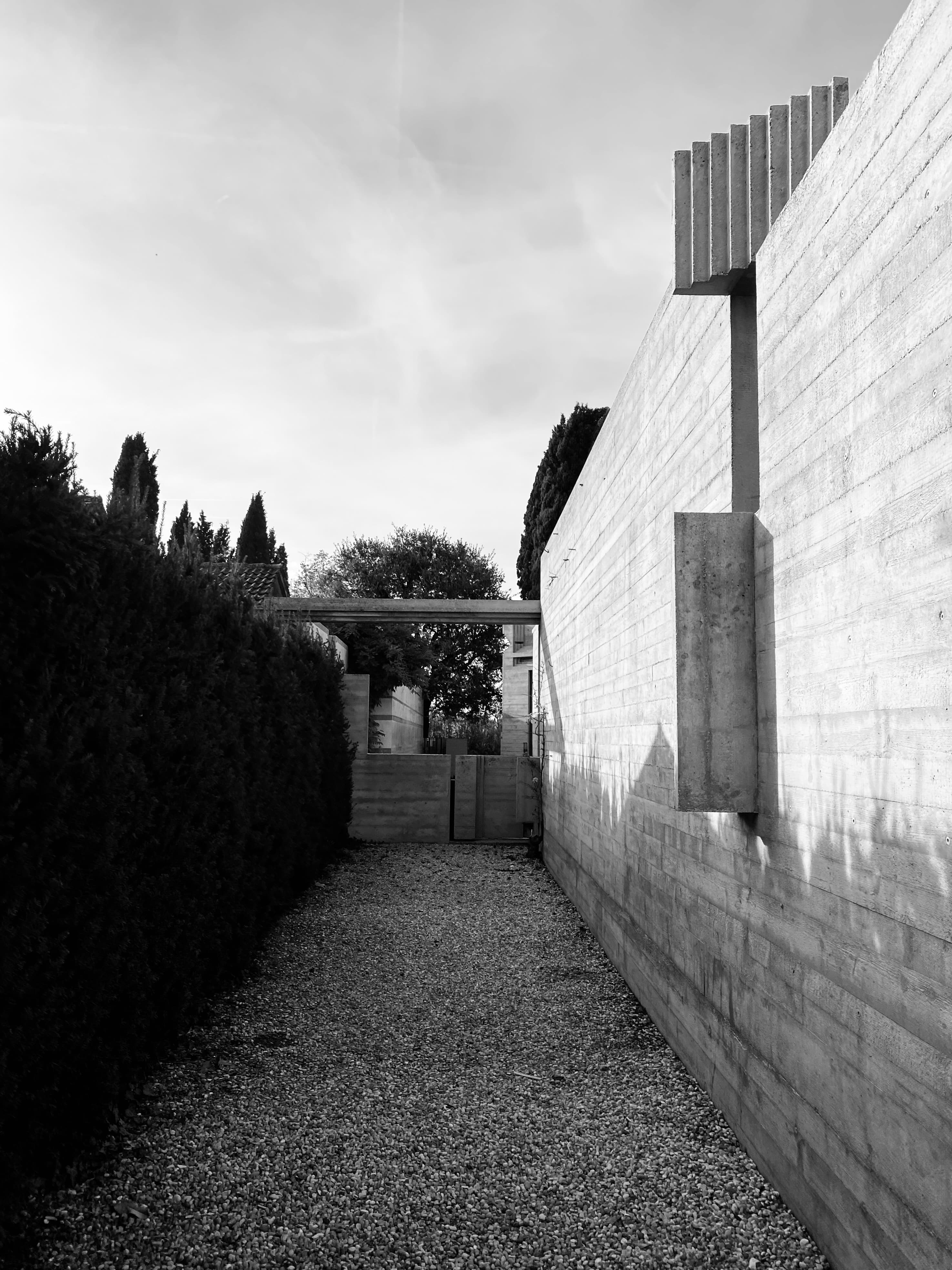
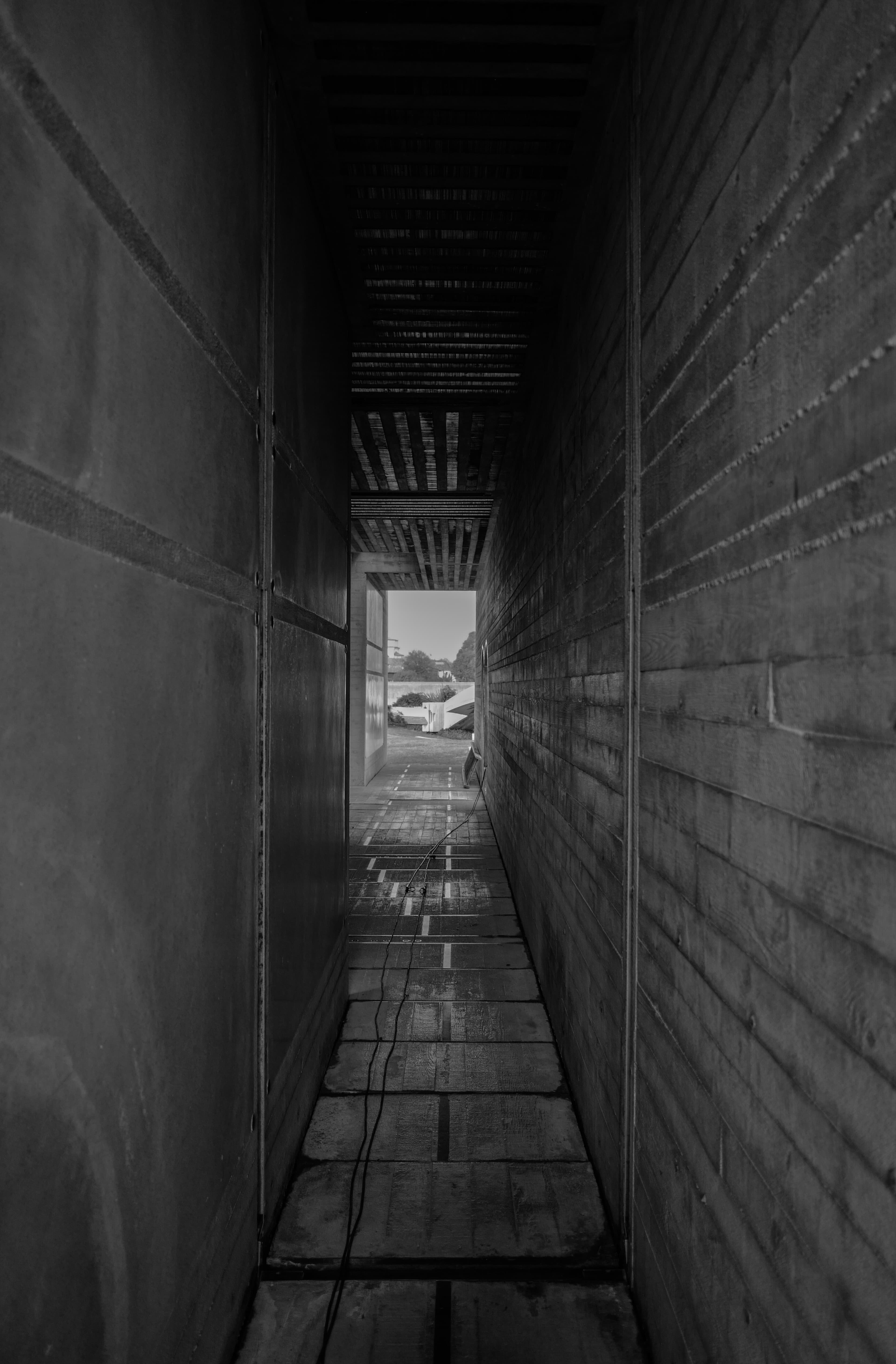
Moving past the gridded, decorated front of the public cemetery, we entered the garden of the dead. The entrance is marked by two interlocking rings, their rims lined with colorful mosaic, framing the view outward. Japanese architects use openings to frame a view meticulously into nature, but here you are looking out to three abstracted bands of color: blue for sky, sand gray for wall, and green for the lawn. Yet you are still drawn to it. Looking left and right, the horizontal concrete hallway is the true threshold of the space, almost like entering the belly of a whale. The hallway was black and white even without the camera filter.
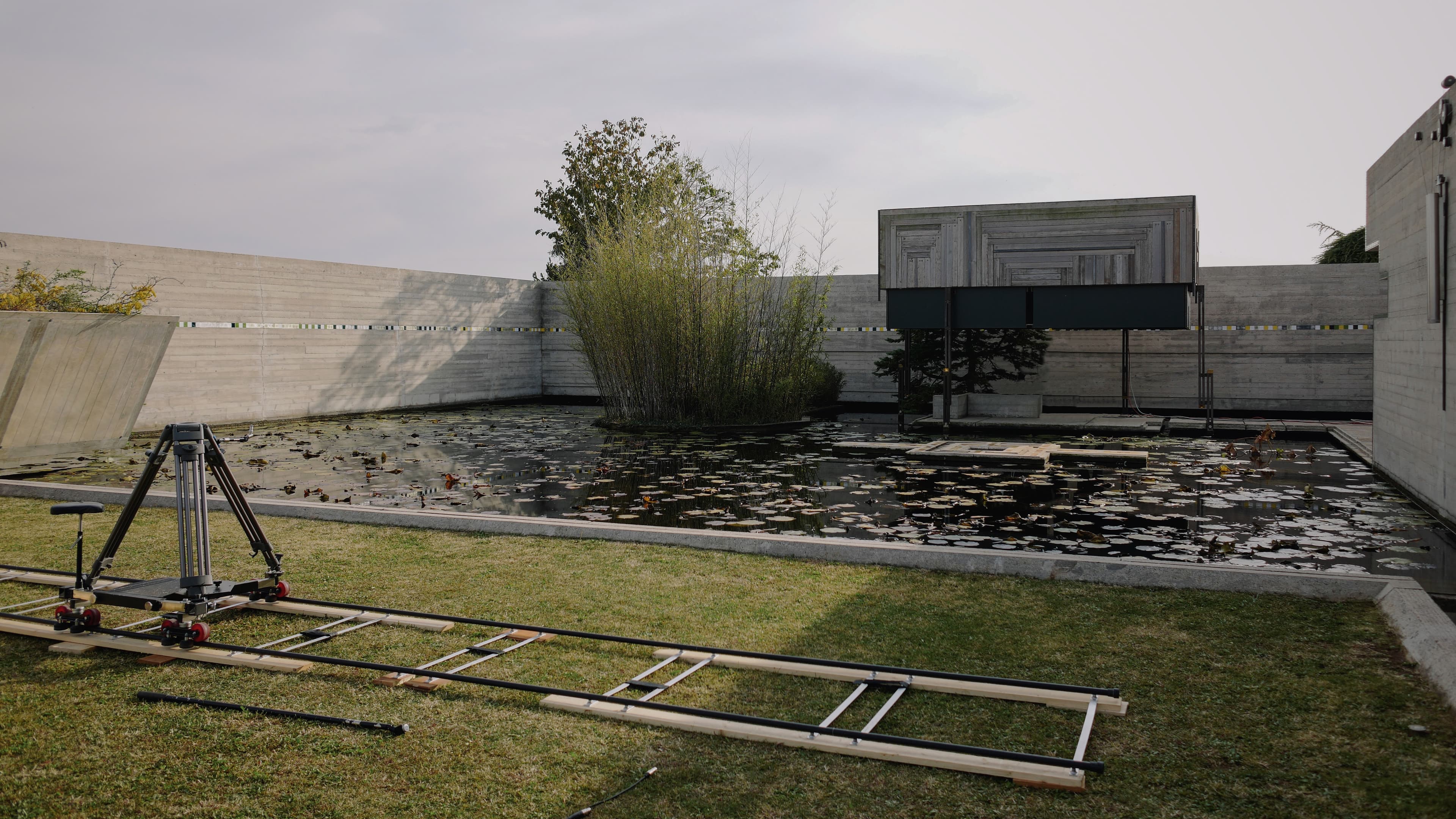
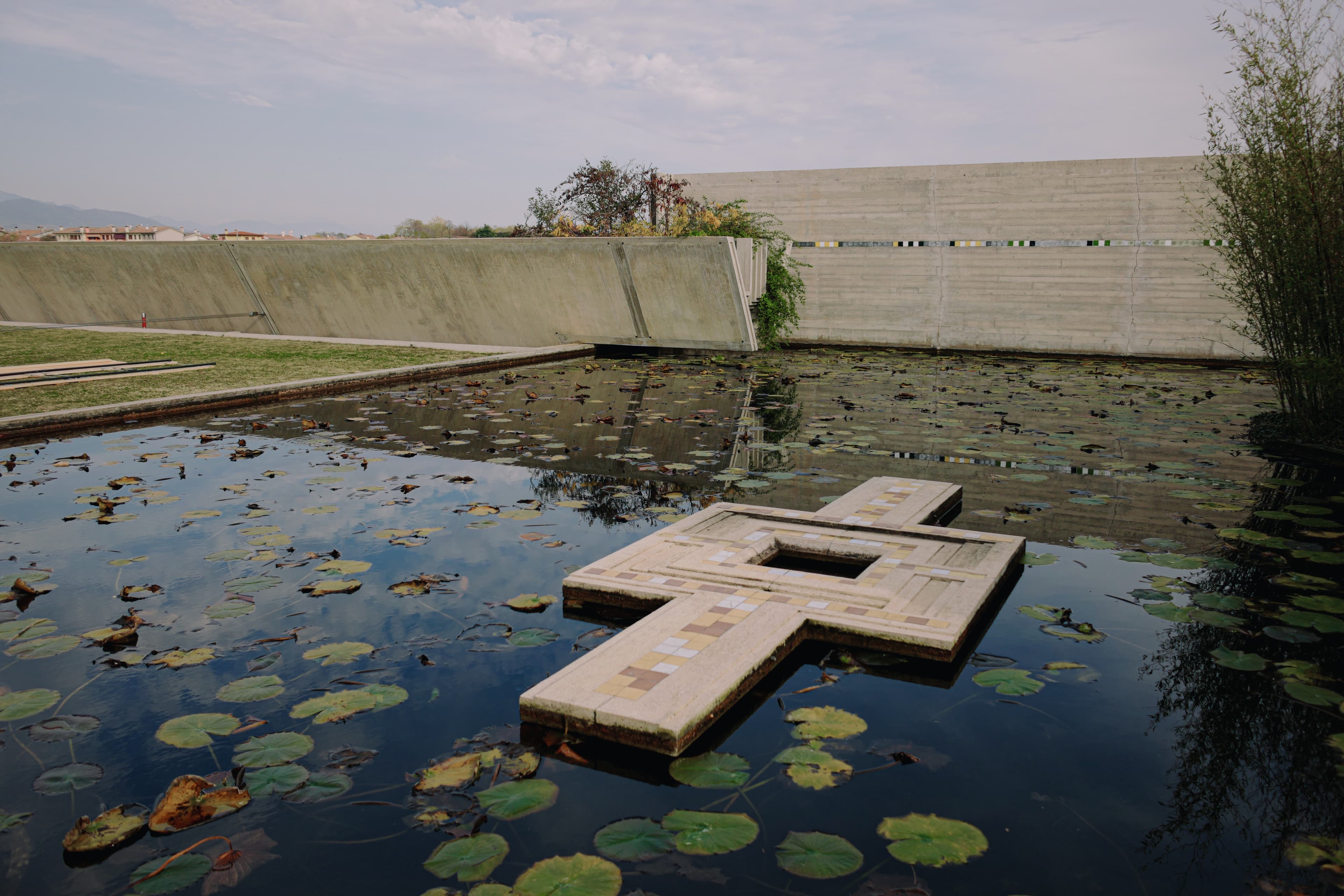
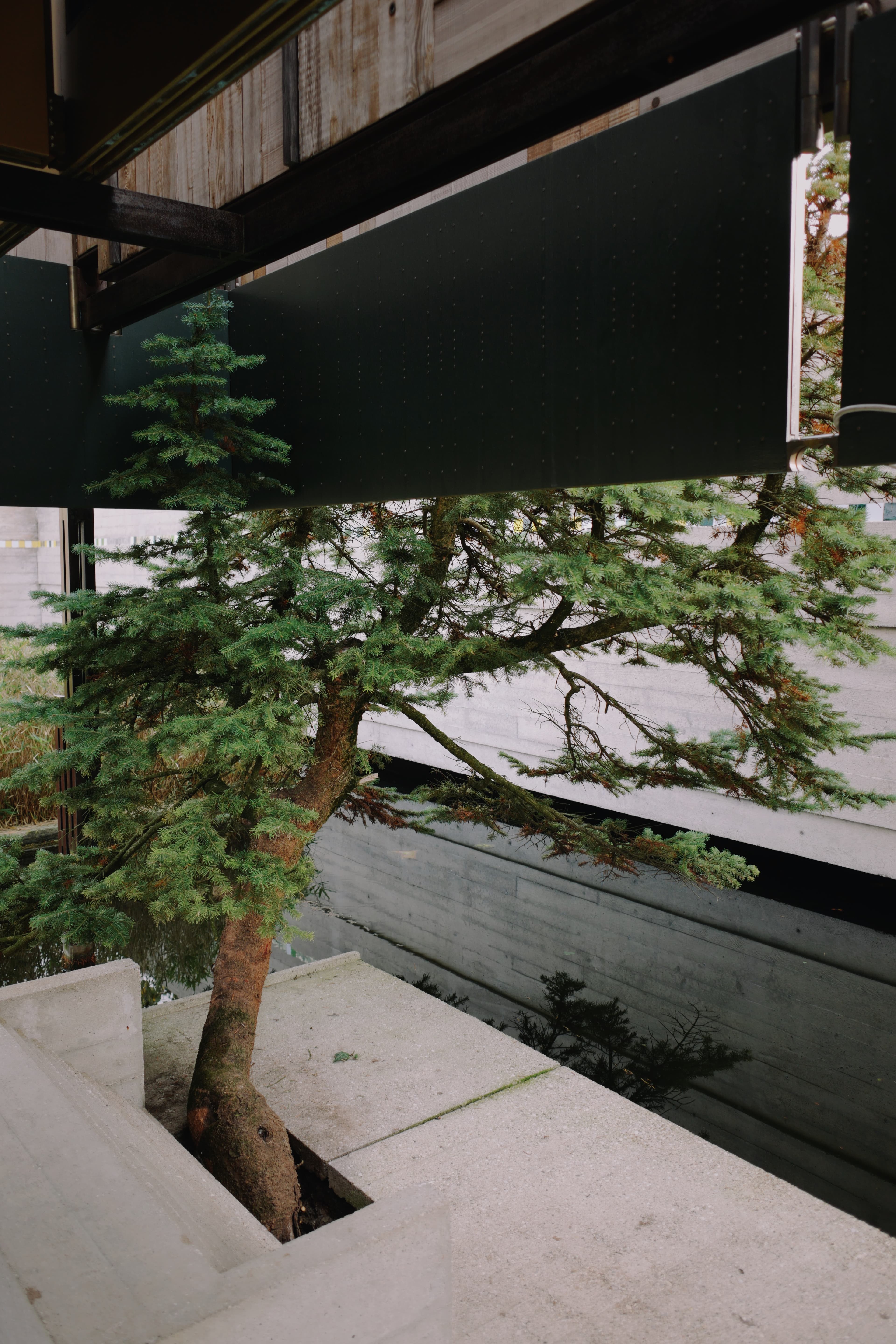
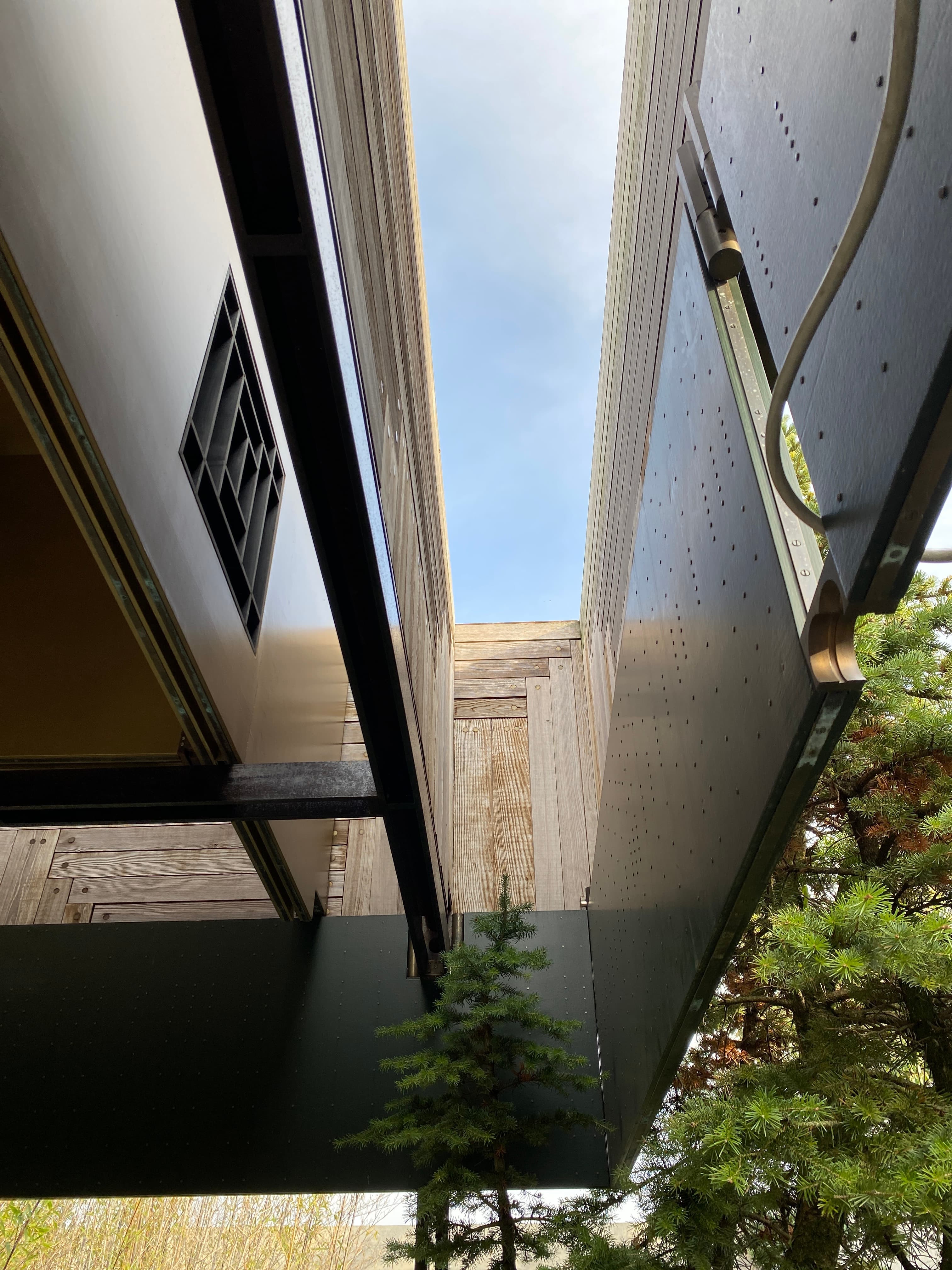
The pavilion canopy in the center of the pond demanded both attention and submission. A tree fit perfectly within its concrete cutout, growing at a slant, stretching outward to escape the roofline. The canopy could fit the four of us just about right, with the stone seating area in the middle. Not wanting to submit too soon, I first touched and looked at the details of the joints and paced around. The metal detail at the front of the canopy looked like binoculars (and they are a recall pattern of the two mosaic circles at the entrance), inviting the visitors to look through the two holes. The canopy was casting shadows on me. My sight was blocked when I stood under it, but the canopy seemed to rise when I sat down. The world quieted down after sitting. Maybe I am romanticizing it a bit, but at that moment it felt safe and quiet. I had a canopy above me, stable ground under me, and I was surrounded by a peaceful pond.
My attention moves like a meandering thought. I rarely have the patience to experience architecture by trailing behind a tour guide. I always wander off, stopping at the most random spots. This exact habit once got me reprimanded during a tour of Philip Johnson's Glass House. Though, perhaps the scolding was also because, while the guide lectured, I was whispering to my friends about Johnson being a child of immense privilege who effectively bought his way into MoMA's architecture department.
Looking a layer deeper, my conflict with the guide was a symptom of the architecture itself. The Glass House is not a home; it is a modernist panopticon. It operates on the mechanics of absolute visibility, a glass box of spectacle and surveillance where every motion feels choreographed and monitored. Whether back then, when Johnson was throwing his high-society salon parties, or today, as we make our obedient, curated pilgrimages, the architecture demands discipline. In a glass box, you cannot wander; you can only perform.
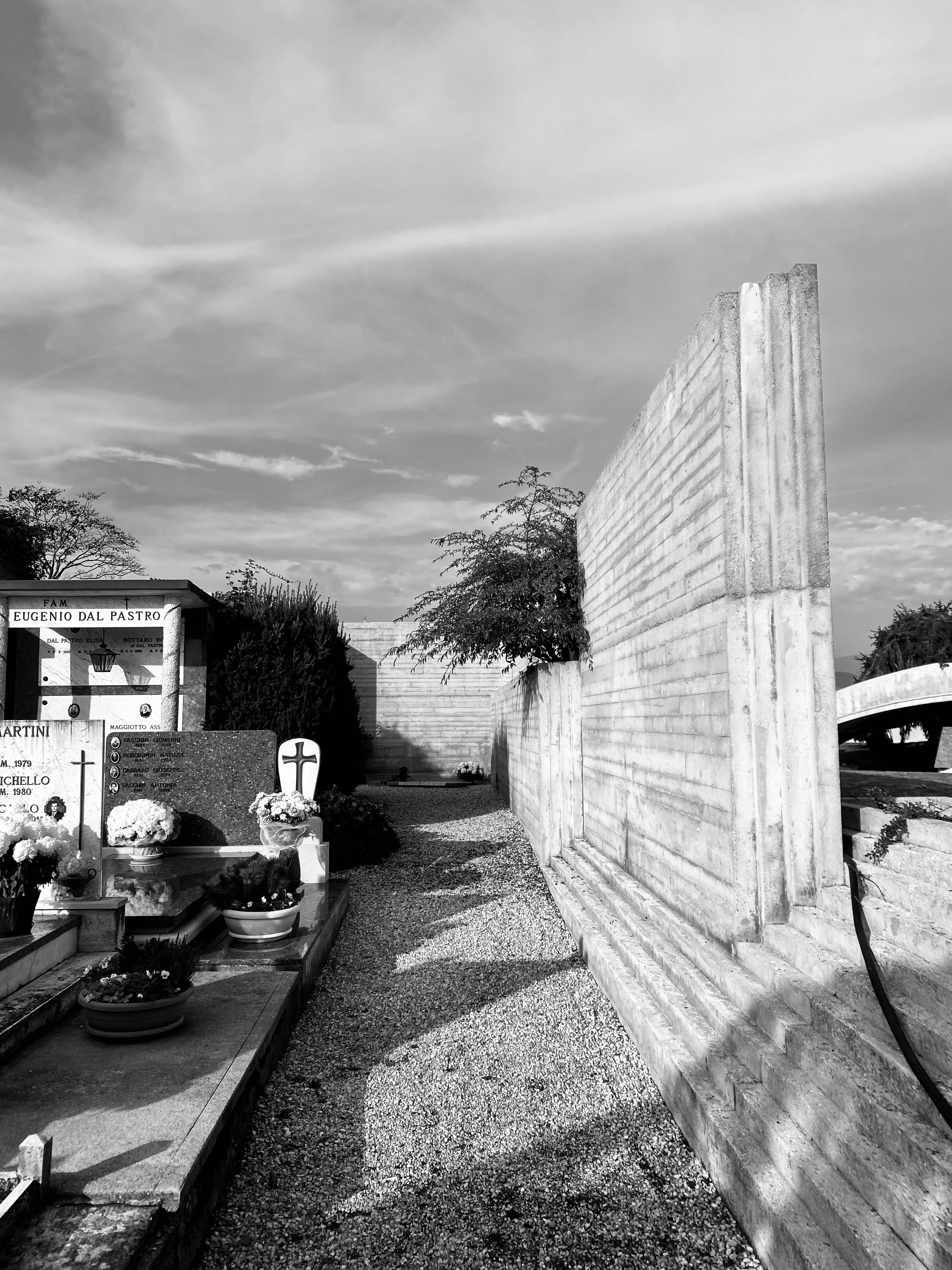
Tomba Brion, however, operates as a labyrinth, asking quietly for something else entirely. When we were finally on Scarpa's grounds, I was stepping on the lawns and traversing back and forth through the concrete tunnels. I was intentionally disrupting the linear circulation of the space, leaning into the labyrinthine layout. Unlike the transparent discipline of modernism, Brion invites meandering; it is an architecture that forgives, and even rewards, getting lost.
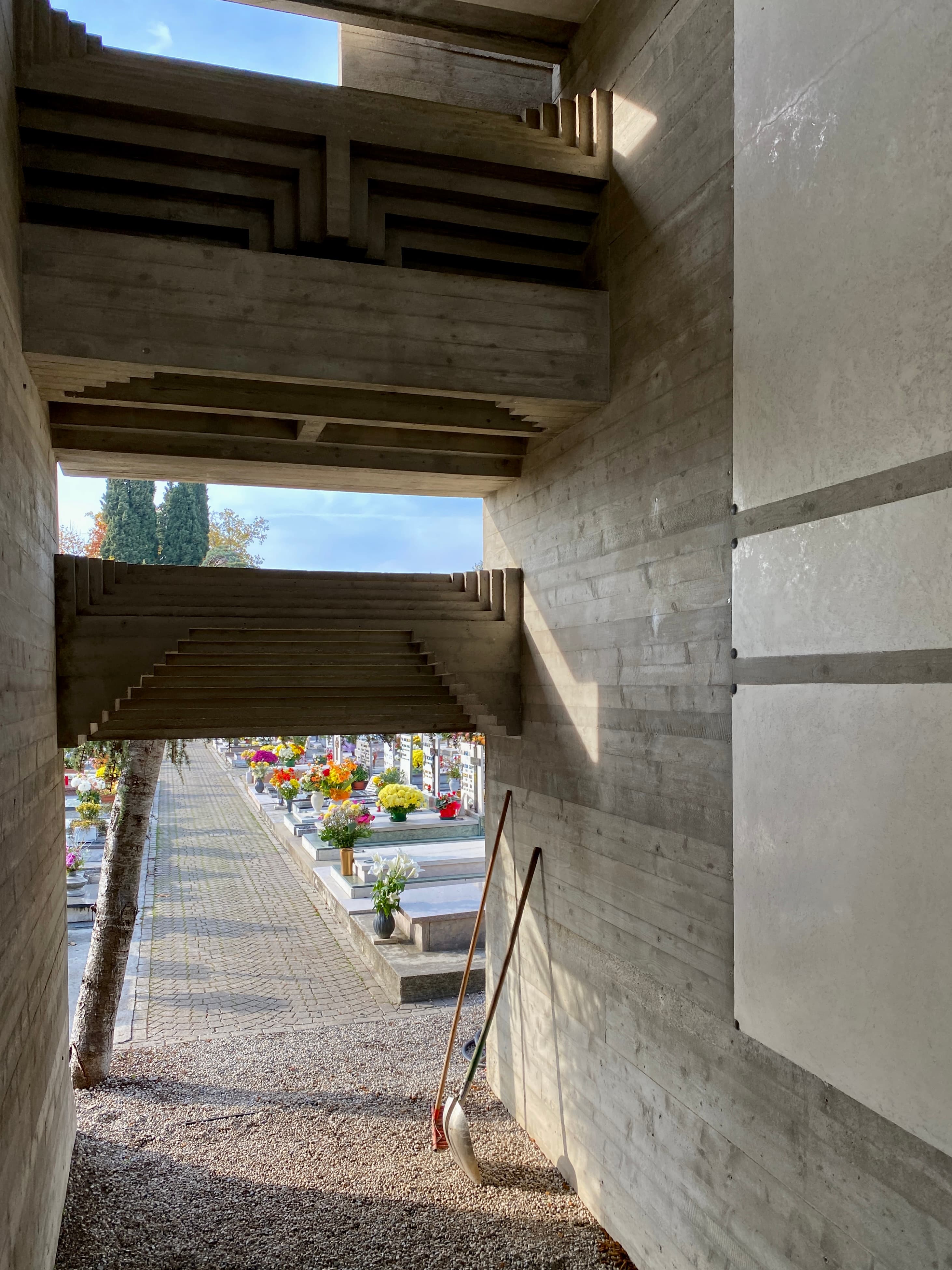
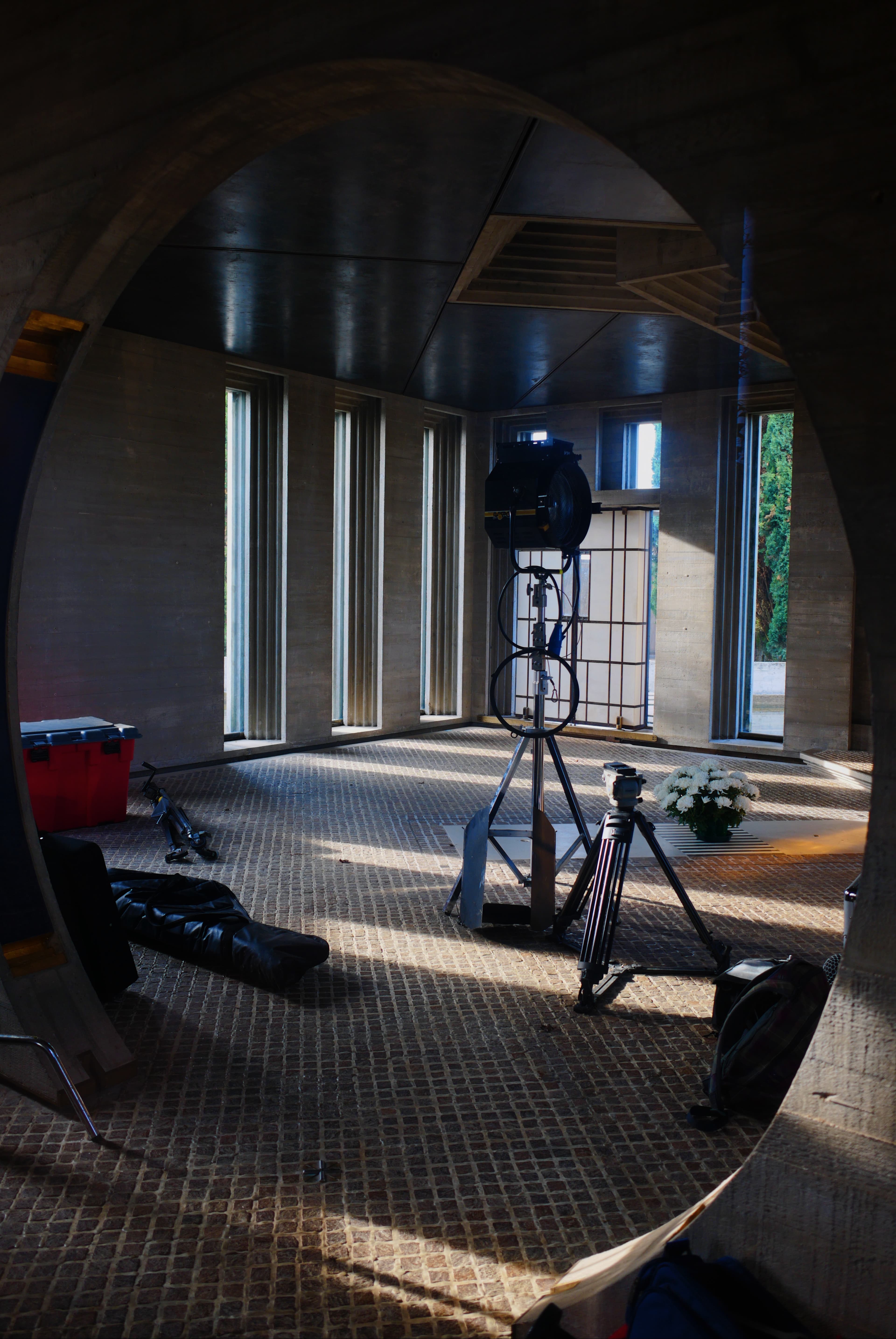
Speaking of disruption, there was a film set shooting on the site. I took pictures of their equipment intruding upon the pristine architectural image. Seeing that the interior was taped off, we realized a complete walkthrough was impossible. But looking through my archive of photos later, I realized I have always liked these intrusions of action happening upon the architecture. Most architectural media is obsessed with perfect renderings, flawless lighting, and pure structures untouched by human footprints. These pristine images exist on the verge of irreality: captured moments after construction, before life actually happens. It is too much like a theater set, framed for the perfect angle.
But a building without the markers of time is a dead space. The magic of architecture lies within the weathering of the facade, people stepping onto the floor, kids touching the walls. And at times, things are taped up, maintained, and sometimes even vandalized. These changes make architecture unique in the timeline of the world, and make our every encounter unrepeatable.
Interestingly enough, the intrusion here almost contradicts my statement. The very activity that broke the pristine illusion and created a sense of temporality was, in fact, a mechanism for capturing a moment for eternity. The crew dragged messy, heavy equipment across the quiet concrete monument, breaking its timelessness to burn single moments onto a fragile strip of celluloid. In a strange way, the weightless film feels more immortal to me than thousands of tons of materialized concrete. The incidentals make an instant unique, and capturing it makes it eternal.
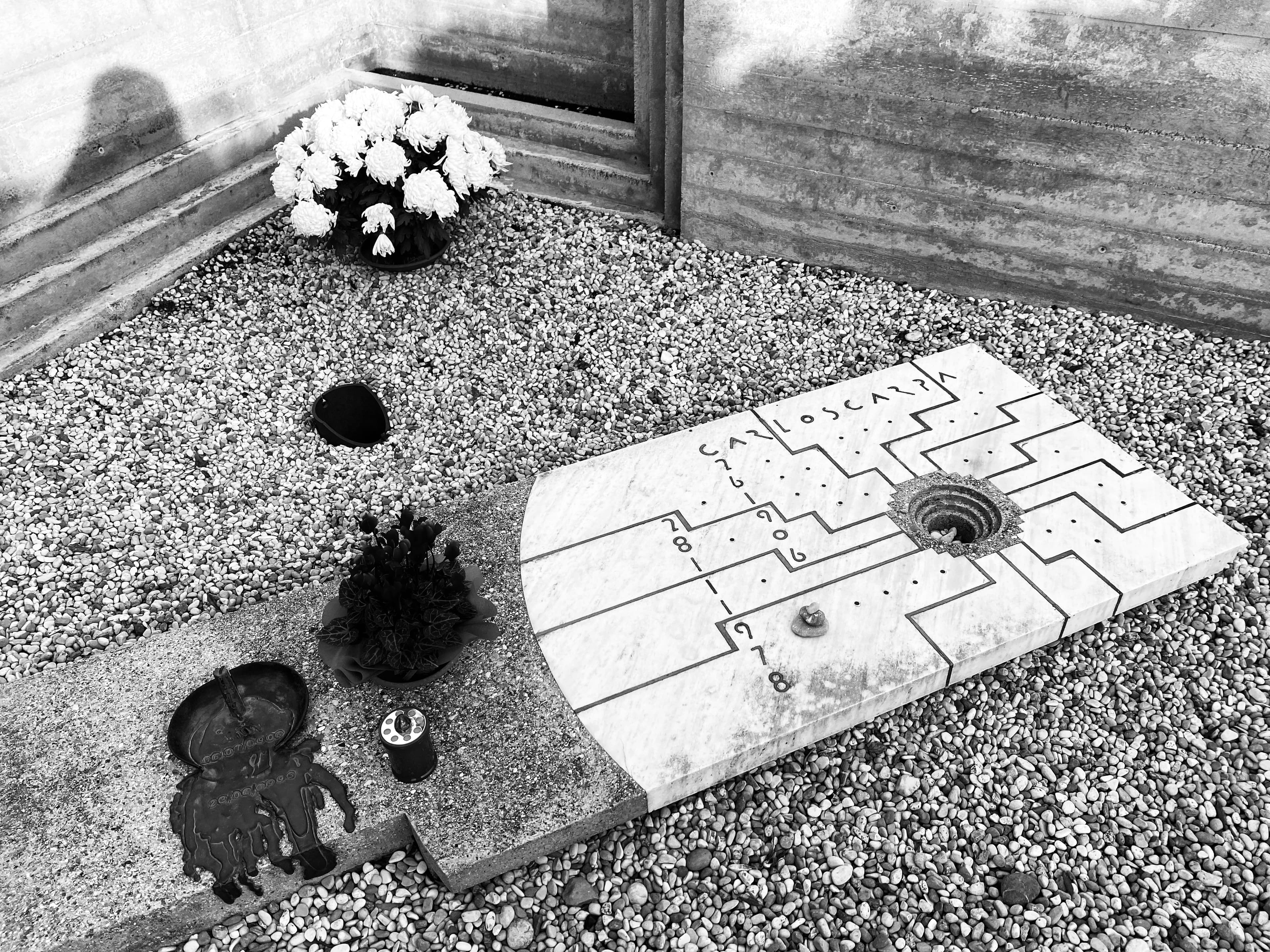
I left the film crew behind, walked along the side of the concrete tunnel, and toward the tail end of my wandering, I saw Carlo Scarpa's grave. It is a small white marble plaque lying flat on the gravel, his name quietly yet meticulously carved out on it. I vaguely remembered the devastating irony of an architect so obsessed with concrete materiality dying after tripping down a flight of concrete stairs, and perhaps subconsciously I knew he was buried here. But it wasn't until that moment that it clicked: this project was not just a decade-long commission; it was his final set design. I wonder if he knew, as he meticulously framed these concrete walls, that he was staging his own eternity. I wonder if he had stood on the dirt or gravel and picked the exact place.
Architects are probably all thinking about this at some level: to be immortal, and then die. The architecture they build, most of the time, will remain longer than their own life. The concrete was cast and solidified; time only weathers the surfaces down a bit, while our flesh will degrade more deterministically towards death, and eventually towards dust or rottenness. Scarpa's grave is at the periphery of the site, and as I turned away, we were back into the vibrant public grave site and then back into the world.
When I started writing about this, that same night, I had a dream.
I dreamed of a long walk with my grandpa. In my dream, his face blurred, shifting fluidly between being my mother's father and my father's father. He became a composite figure, the pure, heavy embodiment of loss. We were on a never-ending highway covered in a thick dust that almost looked like snow. We missed an exit, and the landscape suddenly shifted. We were no longer on a wide road, but standing inside a very old, dilapidated home.
Walking closer, I saw two printed pieces of paper resting in the room. They were two iterations of a tombstone, with a photograph of my grandfather right in the center. In the dream, I knew this was a tombstone he had made and designed for himself. I was trying to forge him an alter ego, blending my memories of him with the ghost of Scarpa, making him an architect for his own eternity.
But the reality is that my grandfather never had a tombstone. Instead, my grandmother bought him a tiny square in a columbarium to house his ashes. It is just one anonymous void in a grid of thousands, located on the very top row. I have visited him three times, yet I have never actually seen the entirety of his little square. Because neither my dad nor I are tall enough, paying our respects always devolves into a breathless, awkward choreography. We take turns jumping, struggling just to blindly push a bouquet of flowers over the ledge.
I guess I never really understood what it means to be buried.
—gallery
Comments
- CAD
<3
- RL
Hello