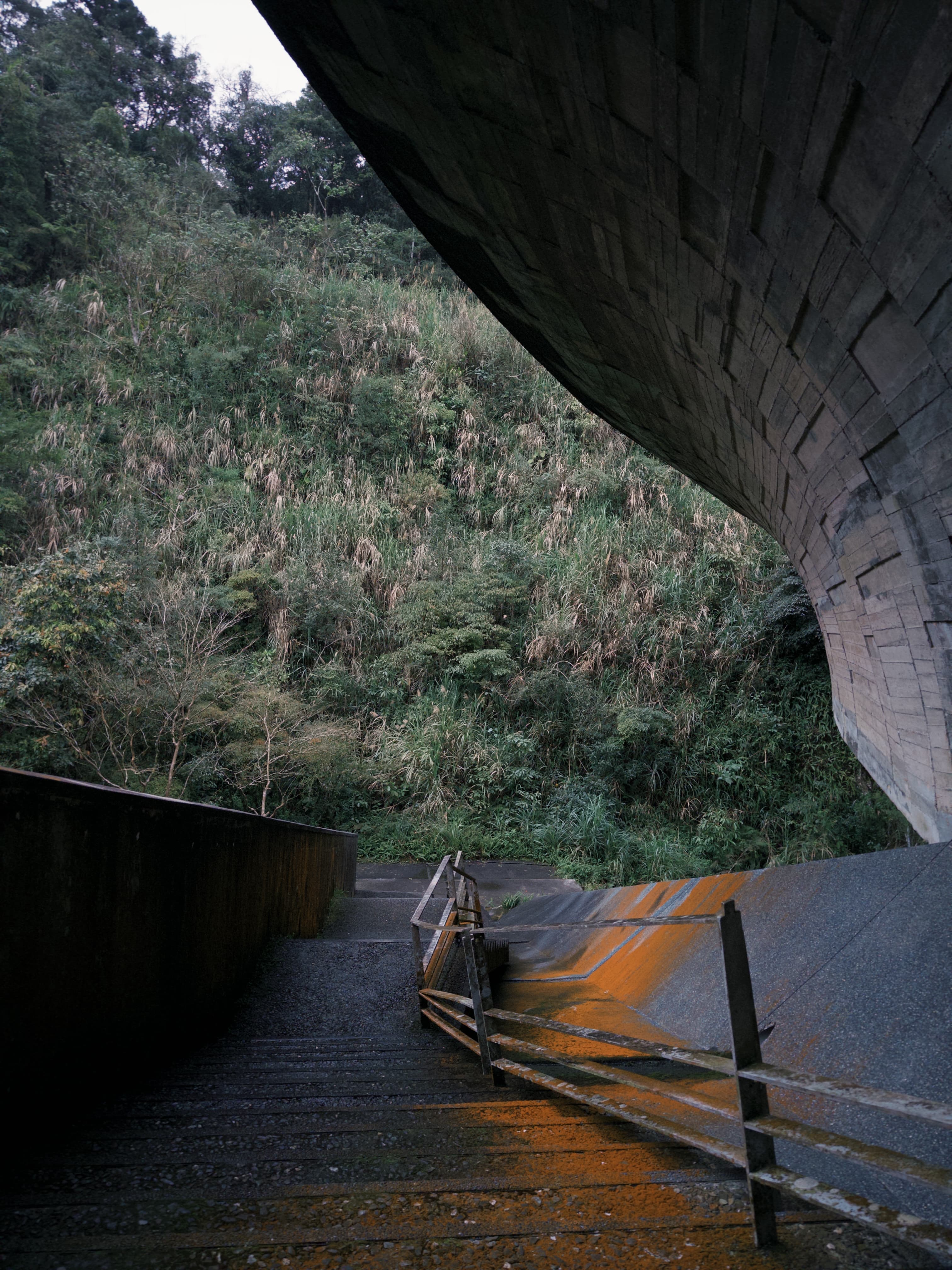
櫻花陵園 Cherry Blossom Cemetery
Research
Architecture History
-
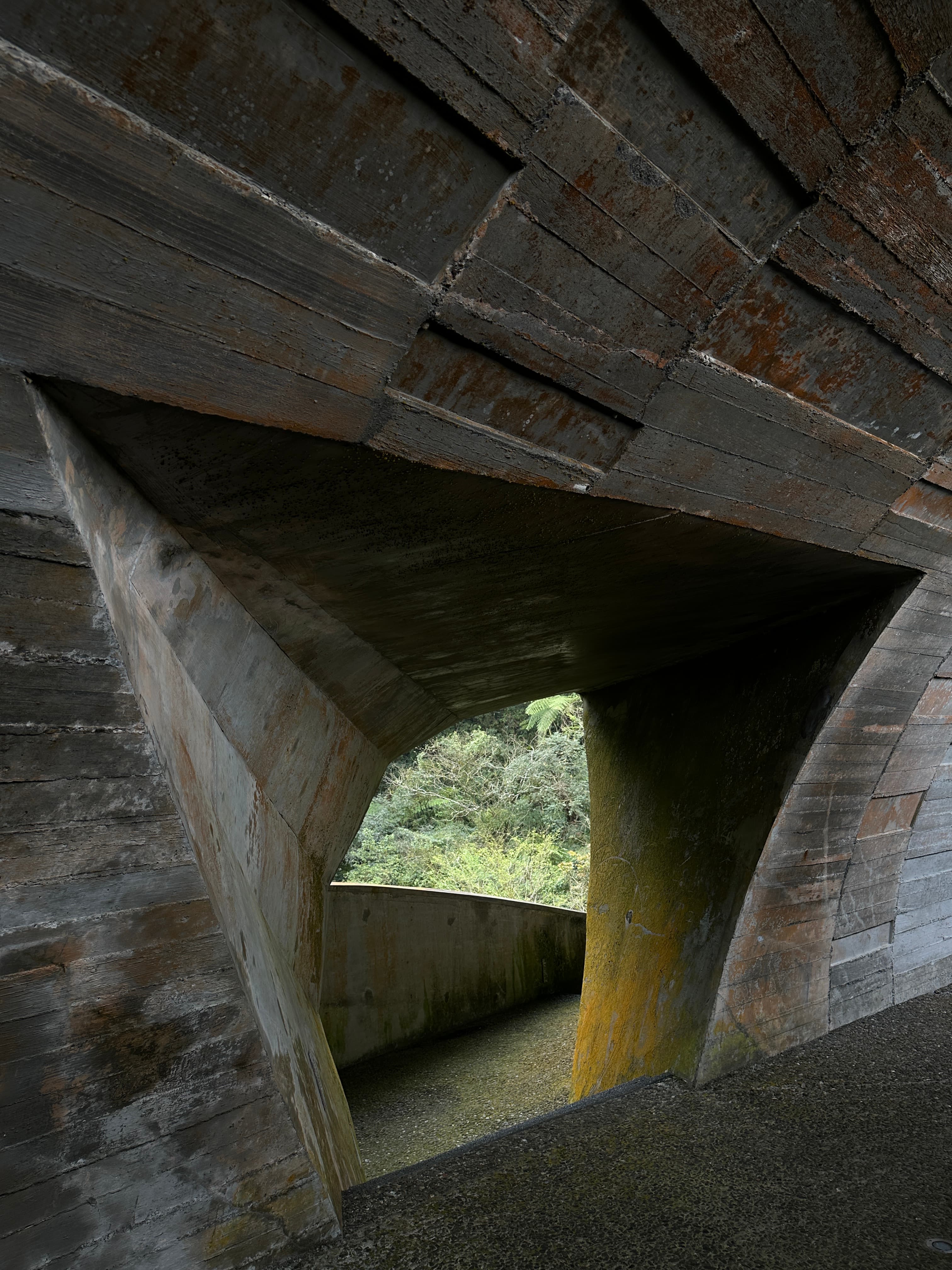
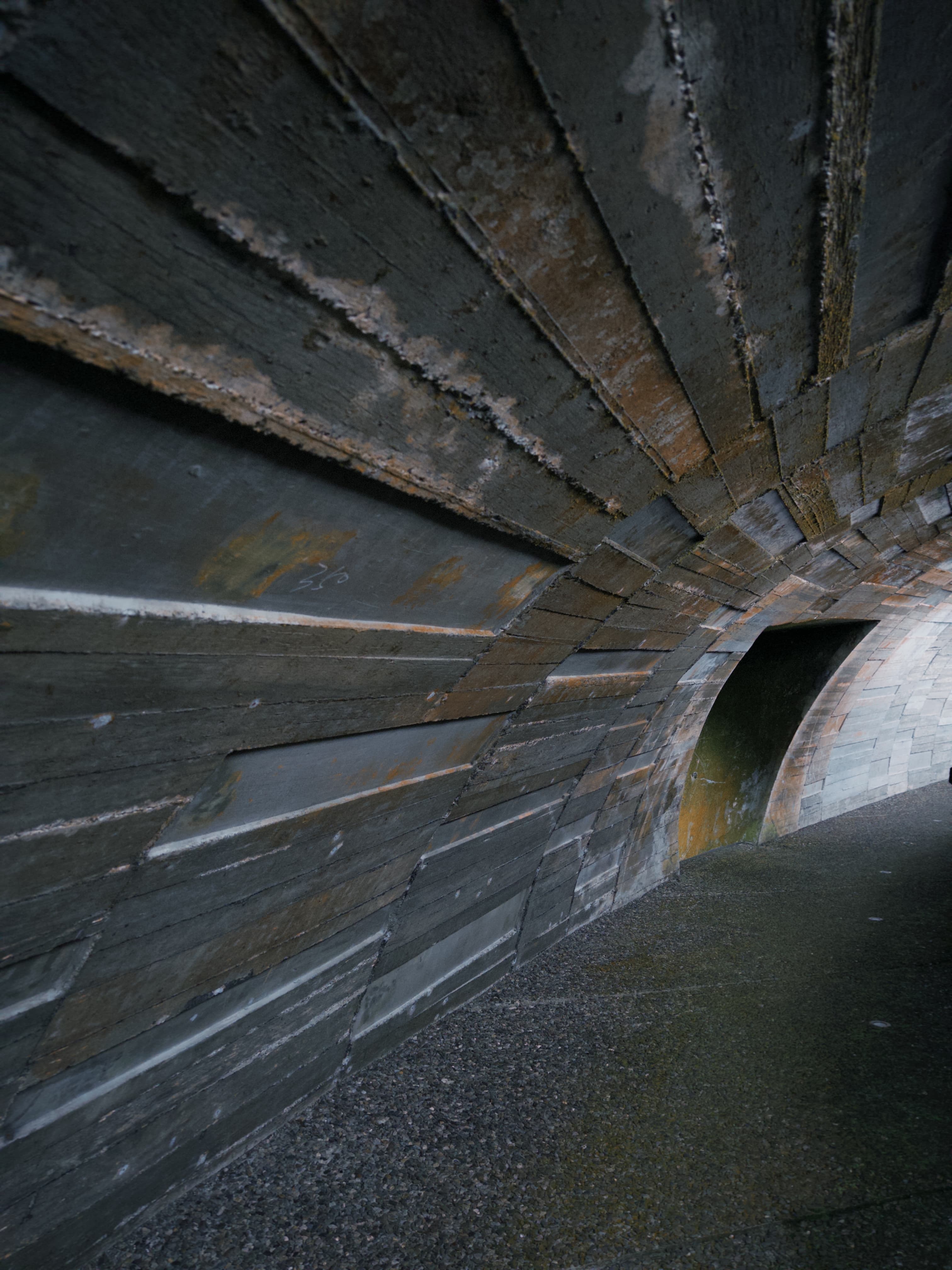
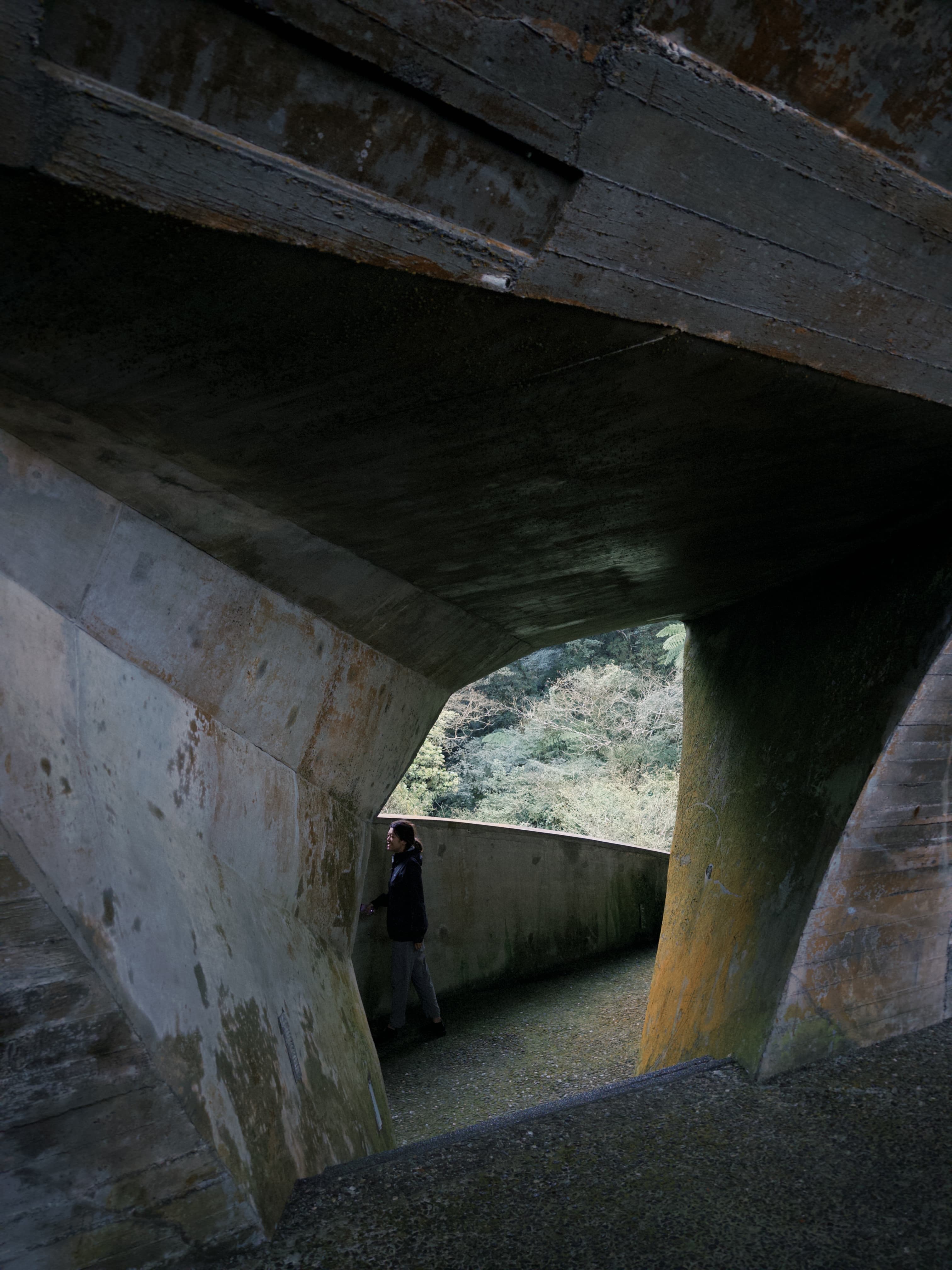
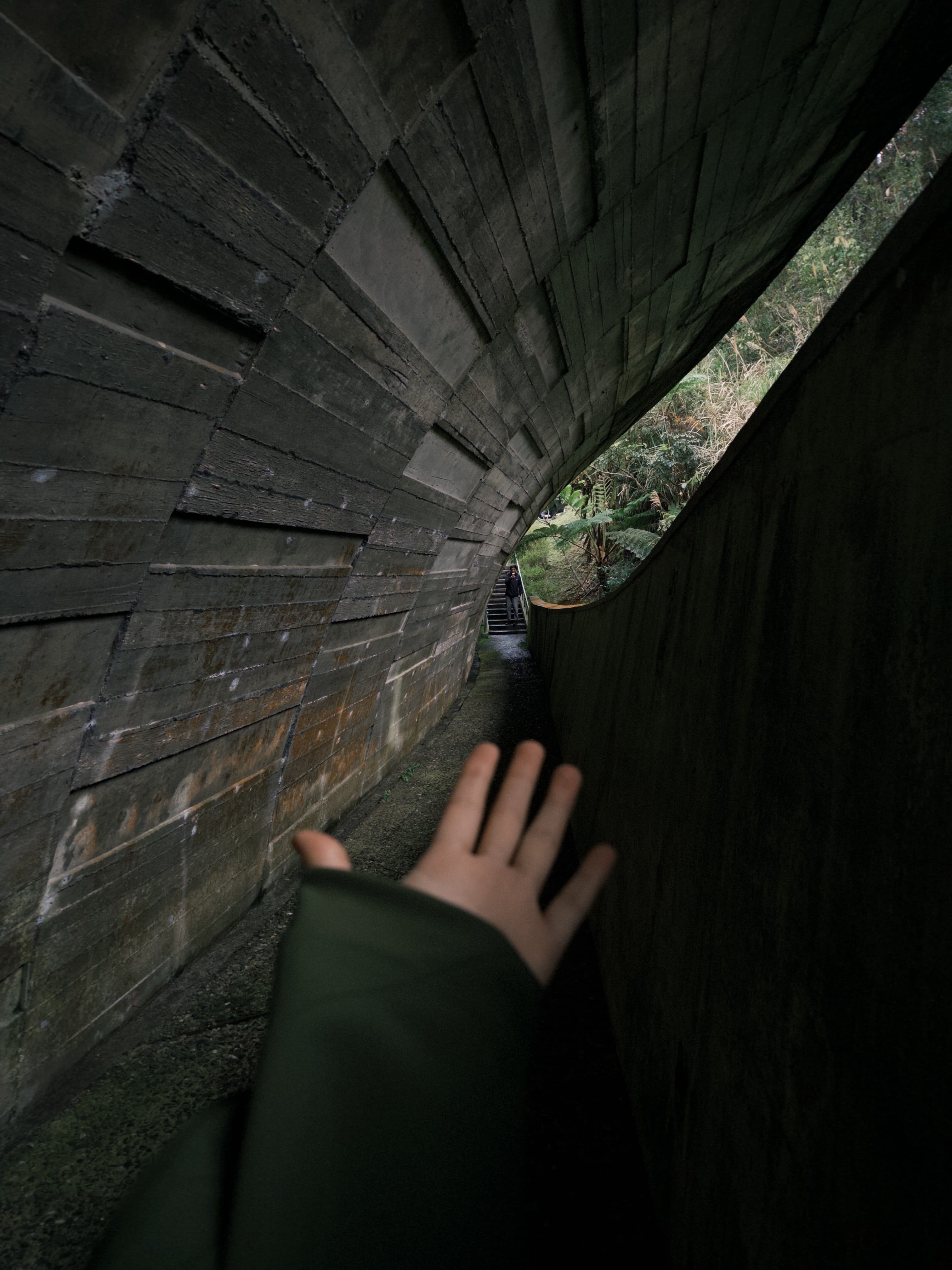
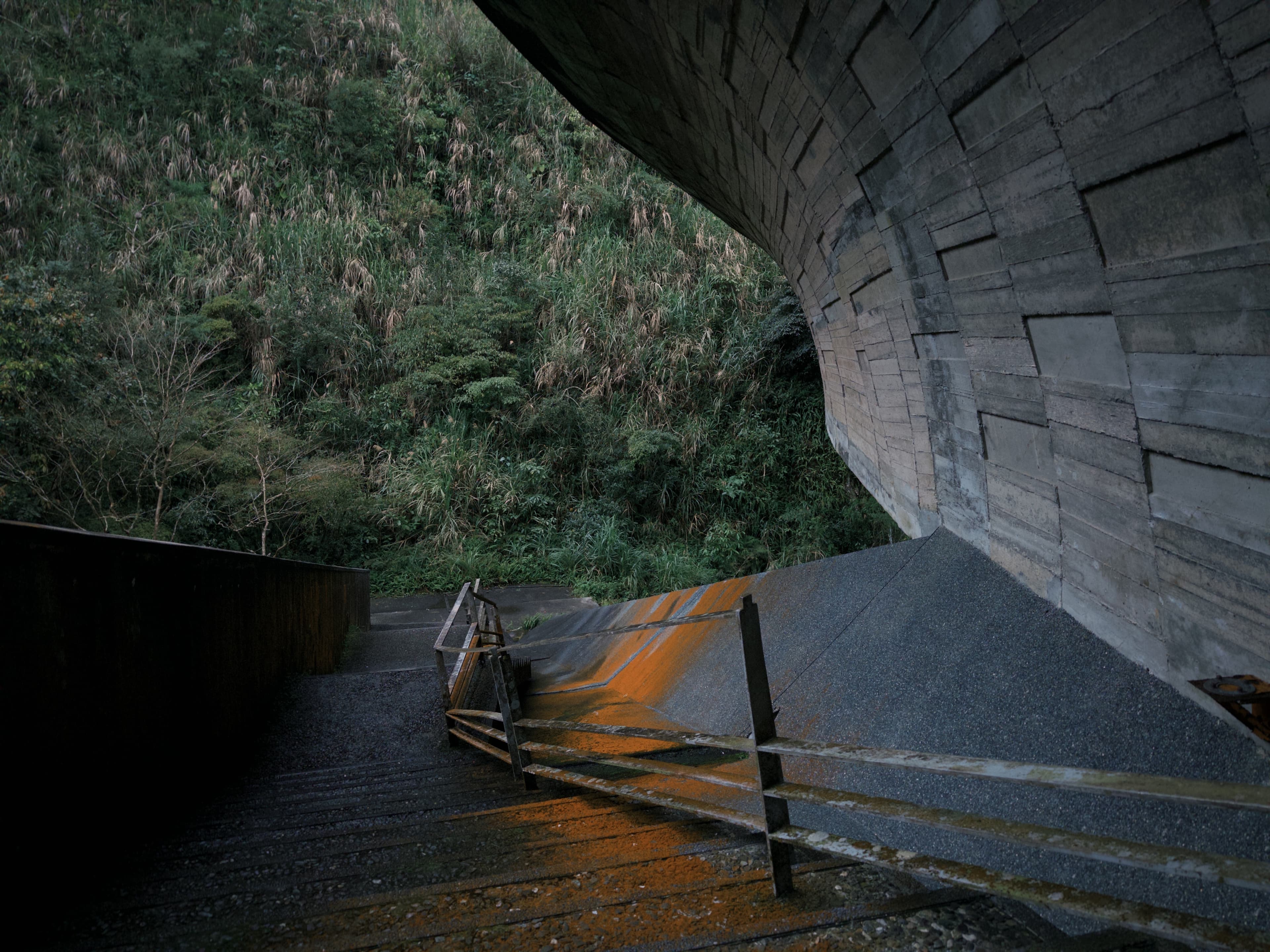
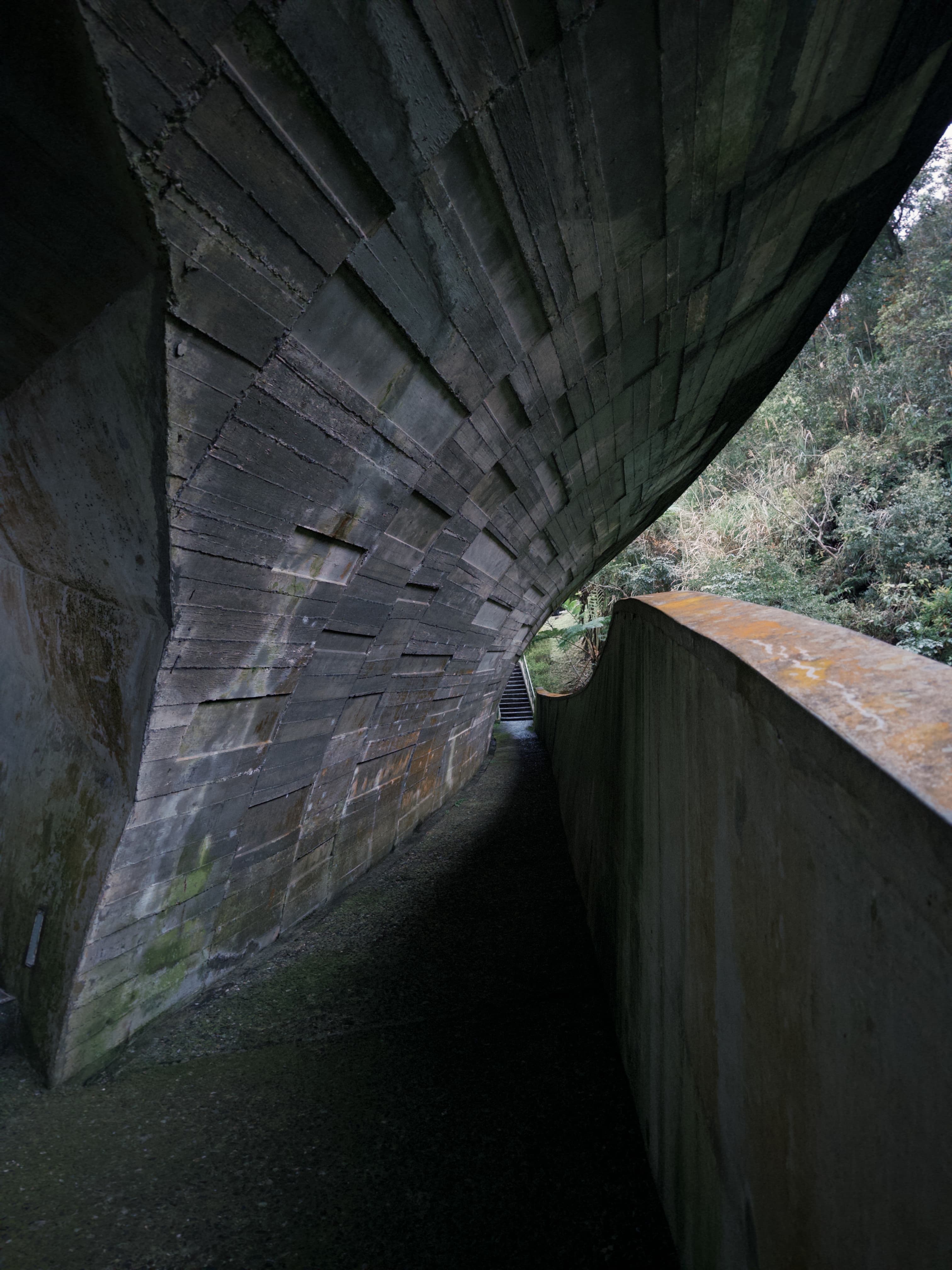
櫻花陵園入口橋+入口服務中心/黃聲遠 田中央聯合建築師事務所 | FAM The most architecturally substantive source available, featuring Huang Sheng-Yuan's own account of the entrance bridge design and detailed documentation of the linear formal strategy—woven concrete slabs, retaining walls, and columbarium corridors—that constitutes the cemetery's spatial sequence. Its description of fog enveloping the brutalist concrete volumes directly engages the article's thematic tags of light atmosphere, threshold, and enclosure.
-
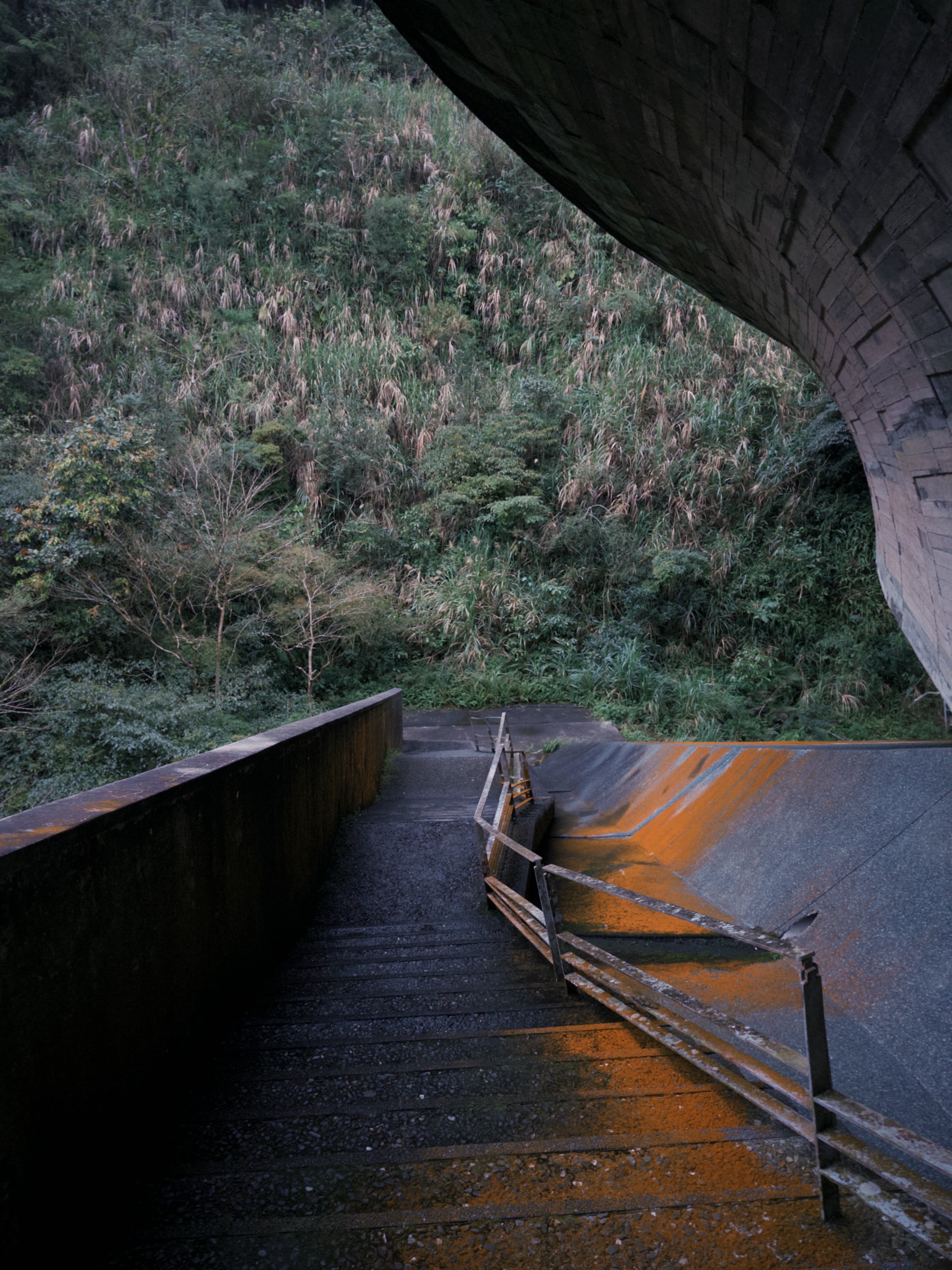
Cherry Orchard Cemetery Fly-over Bridge – Fieldoffice Architects The official Fieldoffice Architects project page for the entrance bridge (2003–2008) provides primary-source documentation of one of the cemetery's most distinctive threshold elements—a curving concrete bridge that mediates between mountain road and sacred ground, directly relevant to the article's concerns with passage and spatial transition.
-
櫻花陵園 | 台湾の建築【世界建築巡り】 A concise architectural overview documenting the cemetery's key spatial elements—the 60-meter curved entrance bridge, the slope-embedded service center, and the seven-tiered concrete columbarium—while noting the deliberate absence of indoor-outdoor boundaries, a condition where enclosure is contingent on weather and affect, directly engaging the article's phenomenological concerns.
-
Huang Sheng-Yuan 黃聲遠 – Fieldoffice Architects Essential biographical and philosophical context for the architect, whose conviction that architecture's root lies in the dynamic and ephemeral rather than the static and tangible provides the intellectual framework for the cemetery's atmospheric and processional design. Includes the firm's award history noting multiple recognitions for the Cherry Orchard Cemetery corridors.
-
樱花陵园 – 维基百科 Provides essential factual grounding for the project: the 45.6-hectare site at 750–800m elevation, the brutalist cast-in-place concrete construction preserving formwork textures, the minimalist elliptical design of Wei-Shui Hill following topographic contour lines, and the deliberate refusal of monumental markers—contextualizing the cemetery's anti-hierarchical memorial ethos.
Critical Theory
-
Taiwan Architecture Finds 'Freespace' at the 16th Int'l Architecture Exhibition Documents the Cherry Orchard Cemetery Service Center's presentation at the 2018 Venice Biennale under the curatorial framework of 'freespace'—understood as architecture's capacity to provide spatial gifts beyond program—positioning the cemetery within a broader critical discourse on architecture as social medium and the political context of Taiwanese architectural identity.
-
黃聲遠 – 維基百科 Situates Huang Sheng-Yuan's practice within a critical biographical and institutional context—his Yale formation, return to Yilan as a deliberate periphery-seeking act, and the 2014 Cherry Blossom Cemetery service center as part of a sustained two-decade project of civic architecture—essential for theorizing the cemetery as an act of regional resistance to metropolitan centralization.
-
Cherry Orchard Cemetery by Fieldoffice Architects – The Architectural Review The Architectural Review's critical assessment frames the cemetery as a space where living and deceased 'become one with nature,' positioning it within discourses on the dissolution of subject-object boundaries and architecture's capacity to mediate between human finitude and the natural continuum—though full access requires subscription, the framing alone signals the project's critical significance.
-
Fieldoffice Architects – Official Website The firm's comprehensive project timeline reveals the cemetery as a multi-phase, decade-long undertaking (fly-over bridge 2003–2008, Corridor D 2005–2009, service center 2005–2014, Wei-Shui memorial 2011–2015), enabling critical analysis of the project as an evolving architectural organism rather than a fixed object—a temporal dimension central to understanding its processional and sequential logic.
Psychoanalysis & Architecture
-
櫻花陵園入口橋+入口服務中心/黃聲遠 田中央聯合建築師事務所 | FAM The description of the cemetery as a landscape where 'gaps between elements let wind, rain, trees, scenery, visitors and spirits linger'—and of the entire site as 'a theatre of nature and the cycle of life'—invites psychoanalytic readings of the architecture as a transitional space in the Winnicottian sense, mediating between the mourner's inner world and the external reality of loss.
-
櫻花陵園 | 台湾の建築【世界建築巡り】 Notes that the boundary between interior and exterior 'is not presented and differs according to the viewer's emotion and the weather'—a spatial indeterminacy that resonates with psychoanalytic concepts of the uncanny and the liminal, where architectural enclosure becomes a projection of subjective states rather than an objective condition.
-
樱花陵园 – 维基百科 Documents the anti-monumental design ethos of Wei-Shui Hill—no tall memorial, no ornament, only a grassy slope for rest and reflection—offering material for psychoanalytic inquiry into how the refusal of the phallic monument enacts a different economy of mourning, one oriented toward introjection rather than idealization.
Film Theory & Architecture
-
櫻花陵園入口橋+入口服務中心/黃聲遠 田中央聯合建築師事務所 | FAM The evocative description of fog slowly invading the hilltop cemetery from the valley, partially concealing the undulating concrete volumes 'like a giant serpent hidden in the forest,' constitutes a cinematic spatial narrative—an architecture experienced as a sequence of atmospheric revelations and concealments that parallels the logic of montage and the moving frame.
-
第0792篇[宜蘭礁溪]櫻花陵園/櫻花橋/渭水之丘X影像導覽 An image-guided walkthrough that effectively functions as a visual storyboard of the cemetery's spatial sequence—from the mountain road approach, through the curved bridge threshold, past the green-roofed service center, to the climactic panoramic reveal at Wei-Shui Hill—documenting the promenade architecturale as a cinematic unfolding of successive framed views.
-
櫻花陵園 | 台湾の建築【世界建築巡り】 Its compact description of the sequential spatial experience—the 60-meter curving bridge framing the Lanyang Plain, the valley-facing pathway, the slope-embedded service center, and the stepped columbarium oriented toward the hometown landscape—articulates the cemetery as a carefully choreographed sequence of views and enclosures analogous to filmic shot composition and pacing.
—gallery