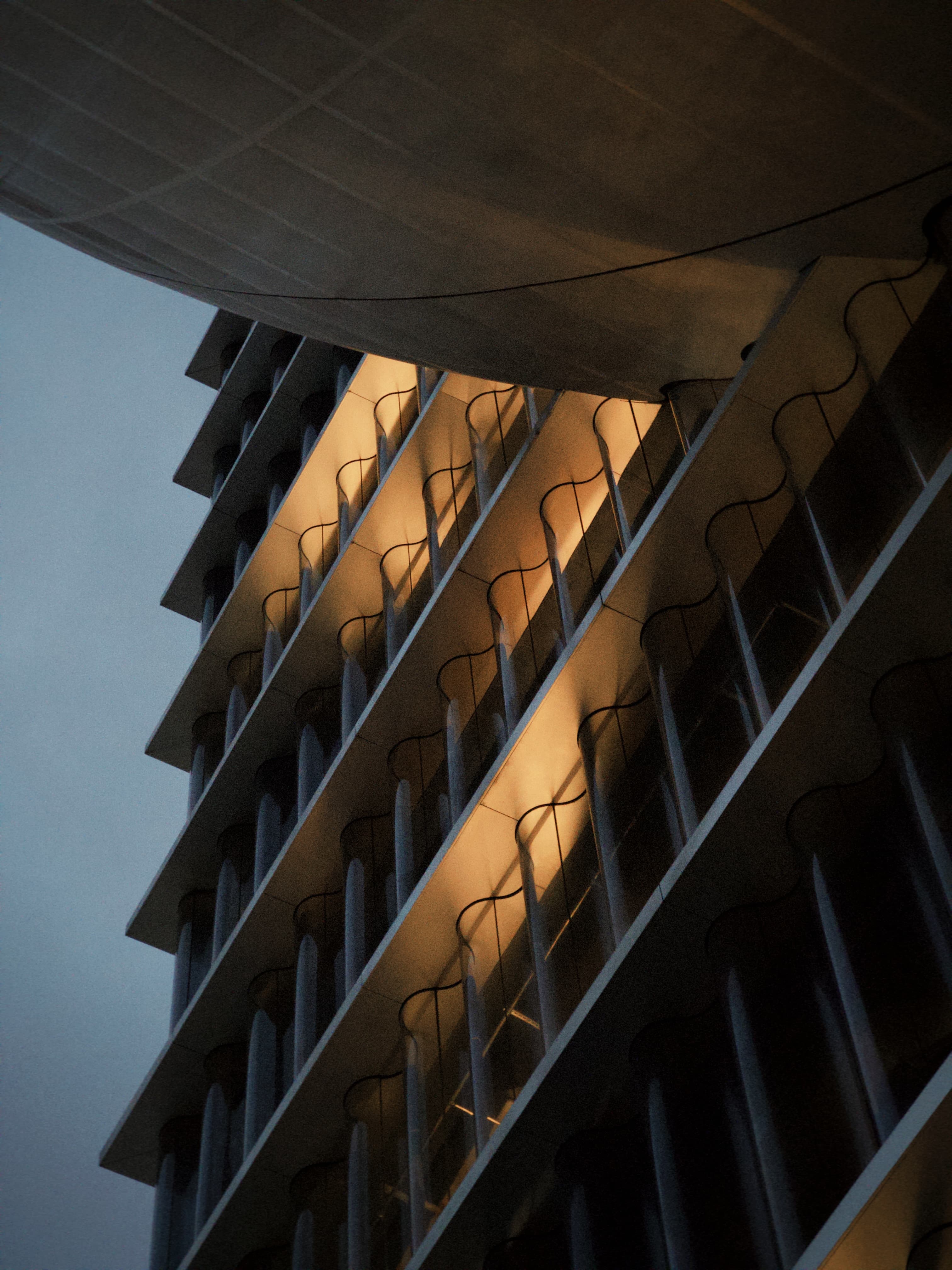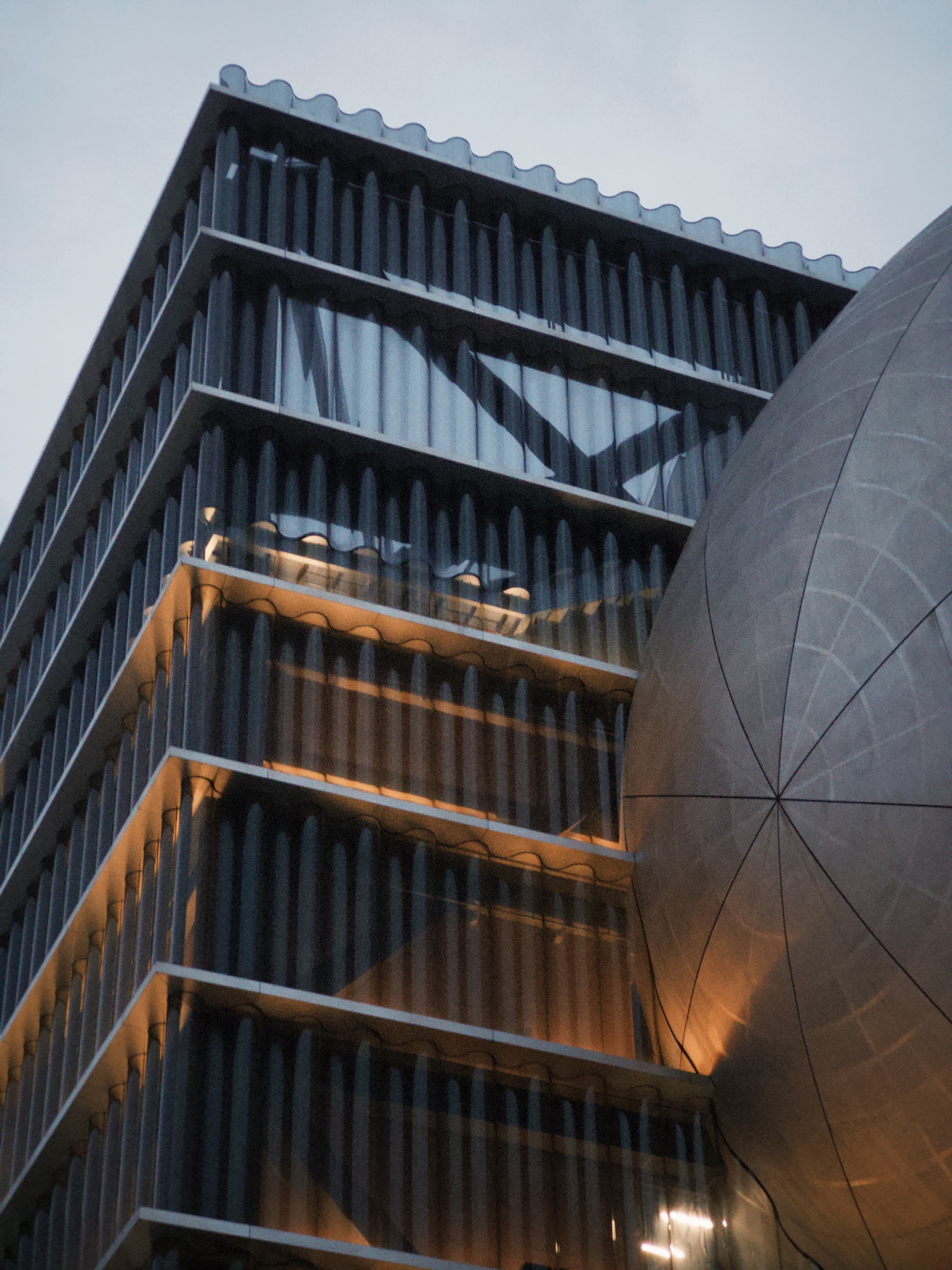
Taipei Performing Arts Center
Research
Architecture History
-
At OMA's Taipei Performing Arts Center, Building as Public Performance | Architectural Record The most critically substantive account of TPAC, situating it within OMA's genealogy of theater investigations (from the Netherlands Dance Theater to the Wyly Theater) and reading its raw, machine-like aesthetic through Kazuo Shinohara's theory of functional 'messiness.' Its discussion of the 'public loop' as a secondary spatial diagram directly engages the article's themes of sequence and threshold.
-
Taipei Performing Arts Center — OMA OMA's own project description provides the canonical framing of TPAC as a critique of standardized theater typology, articulating the design's ambition to recover theater's civic and participatory origins — a key historical argument about the evolution of enclosure and public interiority in performing arts architecture.
-
Taipei Performing Arts Centre — Arup Arup's engineering perspective illuminates the structural logics enabling TPAC's spatial ambitions — the base-isolation system, cantilevering space trusses, and the 'Public Loop' through normally hidden production spaces — offering essential technical context for understanding how the building's thresholds and sequential procession were materially realized.
-
Taipei Performing Arts Center - Architecture Today This concise architectural review foregrounds Kris Yao's characterization of TPAC's 'informal, unpretentious, and raw architecture spaces' as echoing the vernacular spirit of Shilin Night Market — a useful historical framing of how the building negotiates the threshold between institutional cultural enclosure and the plebeian life of the surrounding district.
Critical Theory
-
At OMA's Taipei Performing Arts Center, Building as Public Performance | Architectural Record Frames TPAC as an act of 'good sabotage' that dismantles theater's inflated social hierarchies and the luxe architecture sustaining them. The essay's reading of the building as 'signless and mute' — a machine whose parts are visible but refuse to speak — opens a critical discourse on legibility, spatial enclosure, and the inversion of front/back thresholds.
-
OMA – a f a s i a Reproduces OMA's original competition-era theoretical statement, which poses the foundational critical question — 'Can architecture transcend its own dirty secret, the inevitability of imposing limits on what is possible?' — and describes the Public Loop as a choreographed procession through 'typically hidden' production infrastructure, directly addressing the themes of sequence and threshold.
-
Taipei Performing Arts Centre | Archilovers Details OMA's concept of 'specificity with the freedoms of the undefined,' articulating how the plug-in configuration of three theaters within a shared cube challenges conventional distinctions between autonomous enclosure and shared spatial envelope — a critical reframing of interiority and containment in theater architecture.
-
"Architecture: Cultural Perspective" by Rem Koolhaas and David Gianotten A recorded lecture by Koolhaas and Gianotten positioning TPAC within OMA's broader portfolio of cultural research, offering primary-source theoretical discourse on the building's relationship to global patterns of cultural production and the critical role of architecture in mediating between civic participation and institutional enclosure.
Psychoanalysis & Architecture
-
At OMA's Taipei Performing Arts Center, Building as Public Performance | Architectural Record The essay's account of TPAC's 'mute' volumes and the public's compulsive attempts to assign meaning — likening the forms to preserved duck egg with tofu or three-broth hot pot — reads as a case study in architectural uncanniness, where the building's refusal of legibility provokes collective projection and interpretive desire at the threshold between recognition and estrangement.
-
The Irrational Exuberance of Rem Koolhaas — Places Journal Ellen Dunham-Jones's essay traces Koolhaas's career-long navigation between the 'delirious' realm of desire and pragmatic constraint, drawing on Delirious New York's psycho-histories and Bataille's influence on OMA — providing essential theoretical context for understanding TPAC's liminal oscillation between rational program and irrational spatial affect.
-
Rem Koolhaas From Surrealism to the Structuralist Activity — Academia.edu This academic paper examines Koolhaas's deployment of surrealist techniques to register the complexities of modern urban life, tracing the psychoanalytic underpinnings from Delirious New York through OMA's design methodology — relevant to reading TPAC's sphere (a leitmotif since 'City of the Captive Globe') as a surrealist object operating at the boundary between containment and projection.
-
Obscenities with Metaphysical Backlighting: How Rem Koolhaas's Architecture Addresses the Postmodern Subject Drawing on Jeffrey Kipnis's analysis, this essay theorizes how OMA synthesizes Le Corbusier's free plan and Mies's stage plan to address individual subjectivity rather than collective ideals — a psychoanalytic reading of spatial organization directly applicable to TPAC's manipulation of enclosure, passage, and the viewer's movement through ambiguous thresholds between public and backstage realms.
Film Theory & Architecture
-
At OMA's Taipei Performing Arts Center, Building as Public Performance | Architectural Record The essay's central conceit — 'building as public performance' — positions TPAC as architecture that performs for its urban audience, with the Public Loop functioning as a cinematic promenade through which visitors encounter framed views, portal windows, and backstage tableaux in a montage-like sequence of spatial disclosures and concealment.
-
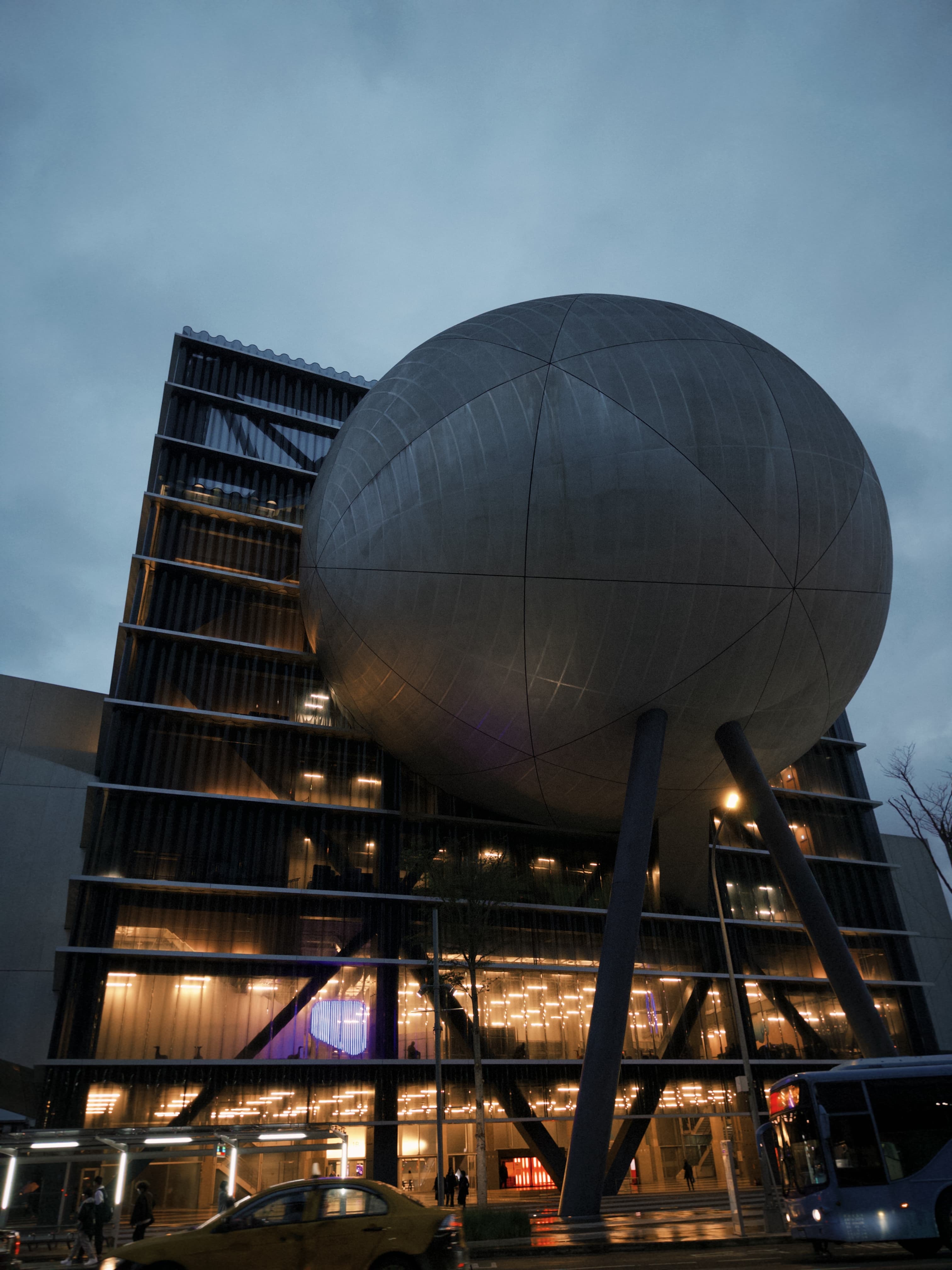
Rendering to Reality: OMA's Otherworldly Taipei Performing Arts Center Approaches Completion — Architizer Journal Describes TPAC as a 'machine for theater' whose suspended sphere evokes 'a spacecraft newly docked within the city like something straight out of Denis Villeneuve's Arrival' — explicitly invoking cinematic imagery to frame the building's estranging presence, while analyzing OMA's program-led design as a rejection of parametric spectacle in favor of functional-sequential spatial logic.
-
Taipei, the Theatre with Three Flavors — Abitare Notes that TPAC's interior 'looks like the set of a science-fiction film' and highlights the red escalator Public Path as a 250-meter cinematic procession through the building's backstage 'bowels' — a description that resonates with the promenade architecturale as spatial montage, where sequential movement through thresholds structures the visitor's phenomenological experience.
-
How Taiwan's new $220 million arts center radically rethinks theater design — CNN Though written for a general audience, this piece contains substantive quotes from Koolhaas and Gianotten on the building's 'distinguishing feature' being the Public Loop rather than its iconic form — framing the sequential movement of ticketless visitors through performance and production spaces as the building's true architectural proposition, relevant to theories of cinematic spectatorship and spatial narrative.
—gallery